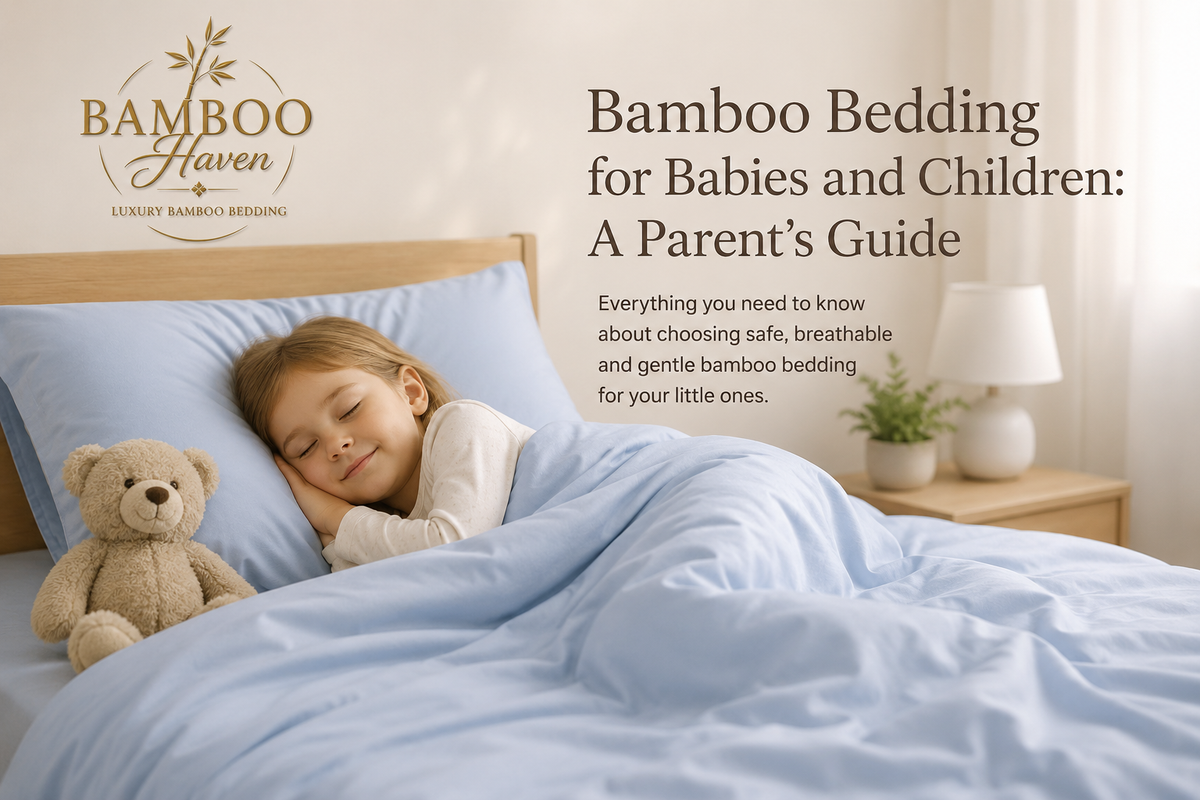
Bamboo Bedding for Babies and Children: A Parent’s Guide
Choosing bedding for a baby or young child brings an additional layer of consideration beyond what most adults think about for their own bedding, given children’s more delicate skin, developing immune systems, and the sheer number of hours young children spend asleep. Understanding what genuinely matters when selecting bamboo bedding for babies and children helps parents make a confident, well-informed choice.
Why Fabric Choice Matters More for Children
Children, and babies in particular, have skin that is generally thinner, more permeable and more sensitive than adult skin, meaning it can be more readily affected by rough textures, trapped heat and moisture, and any residual chemicals present in poorly manufactured textiles. Babies and young children also spend considerably more of their day asleep than adults, meaning the cumulative exposure to whatever fabric they are sleeping on is proportionally even greater across a 24-hour period than it is for most adults. This combination of more sensitive skin and greater proportional exposure time is precisely why fabric choice deserves particular thought and care when it comes to children’s bedding.
Why Independent Certification Matters Even More for Children
As discussed in detail in our dedicated guide to OEKO-TEX® Standard 100 certification, this independent testing standard applies considerably stricter thresholds to products specifically intended for babies and young children, reflecting the general understanding within textile safety science that children’s more sensitive, permeable skin warrants a higher standard of verified safety than standard adult products. When choosing bedding for a child, looking specifically for certification that covers the relevant, stricter children’s product category — rather than assuming a general adult certification automatically extends the same level of protection — is an important, genuinely worthwhile step for any parent prioritising their child’s skin safety.
Also Read: The Best Bedding for Menopause: Managing Night Sweats with Bamboo
Breathability and Overheating Risk
Breathability carries particular significance for infant and young child bedding, given that overheating is a recognised risk factor discussed in official safe sleep guidance for babies. While specific safe sleep guidelines around tog ratings, bedding types and sleep environment for infants should always be followed according to current official guidance — such as that published by the Lullaby Trust in the UK — genuinely breathable fabric such as bamboo viscose supports better overall temperature regulation within whatever specific sleep setup a parent has chosen in line with official guidance, helping avoid the kind of localised heat and moisture buildup that less breathable synthetic fabrics can contribute to.
Parents should always follow current official safe sleep guidance for infants specifically, since safe sleep recommendations for very young babies differ in important ways from general bedding advice suitable for older children and adults, including specific guidance around avoiding loose bedding, pillows and duvets for babies under twelve months.
Softness and Comfort for Sensitive Skin
Beyond safety certification, the genuine physical softness of bamboo viscose makes it a popular choice for children’s bedding on comfort grounds alone, particularly for children with eczema or other sensitive skin conditions, which are relatively common in early childhood. The same qualities that make bamboo viscose a popular choice for adults managing sensitive skin, discussed in our dedicated guide, apply equally to children, and many parents specifically report choosing bamboo viscose bedding after noticing their child’s skin reacting negatively to rougher or more synthetic fabric alternatives.
Durability for Real Family Life
Children’s bedding faces a genuinely demanding real-world test that adult bedding often does not — frequent washing due to spills, accidents and general mess, alongside the everyday wear and tear of an active child’s use. Bamboo viscose, cared for correctly according to the washing and drying guidance in our dedicated care guide, holds up well to this more frequent washing cycle considerably better than lower-quality fabrics that can quickly become rough or worn under the same demands. This durability matters practically for busy parents, since bedding that degrades quickly under frequent washing needs replacing more often, adding unnecessary cost and hassle to already busy family life.
Choosing the Right Tog Rating for Children
Children’s temperature regulation differs somewhat from adults, and tog rating guidance for children’s duvets, once a child is old enough to safely use one according to current safe sleep guidance, generally follows similar seasonal principles to adult tog selection as discussed in our dedicated tog guide, while also accounting for the specific child’s own tendency to run warm or cold, and the specific bedroom conditions they sleep in. Many parents find that a moderate mid-range tog, combined with genuinely breathable bamboo viscose bedding, offers a sensible, comfortable year-round baseline for most UK bedrooms, adjusted seasonally as needed.
Colour and Making Bedtime Appealing
Beyond safety and comfort considerations, involving children in choosing their own bedding colour, where age-appropriate, can genuinely support a more positive association with bedtime and their own bedroom space. Soft, calming tones — as discussed in our dedicated colour psychology guide — remain a sensible general choice for supporting genuine sleep, but allowing an older child some input into their preferred shade within a curated, calming colour range can help build a sense of ownership over their own sleep space that supports a more willing, positive bedtime routine.
Practical Tips for Parents
A few practical habits help make the most of genuinely good-quality children’s bedding: keeping a spare set on hand given how frequently children’s bedding often needs washing due to spills and accidents, involving children in the process of choosing and even helping make their own bed as they get older to build positive independent sleep habits, and paying particular attention to pillowcase and fitted sheet condition given how much closer and more sustained a young child’s contact with these specific items tends to be during sleep.
Involving Older Children in Bedding Choices
For older children and teenagers, involving them directly in choosing their own bedding — within a curated, appropriate range of colours and options a parent is comfortable with — can genuinely support a more positive relationship with their bedroom and bedtime routine, echoing the colour and personalisation considerations discussed in our dedicated colour psychology guide. A child or teenager who feels genuine ownership over their sleep space, having had real input into how it looks and feels, is often more willing and engaged in maintaining good sleep habits within that space, compared with a bedroom that has been entirely decided and decorated without their input.
Managing Transitions Between Bedding Stages
Children move through several distinct bedding stages as they grow — from cot-appropriate bedding in infancy, through simplified, safety-appropriate bedding for toddlers, to full adult-equivalent bedding setups including duvets, pillows and a wider colour and style range as they reach an appropriate age. Each transition is worth approaching thoughtfully rather than rushing ahead of official safe sleep guidance for younger stages, while also recognising that older children generally benefit from graduating to genuinely good-quality, comfortable bedding rather than continuing indefinitely with more basic children’s products once they are developmentally ready for a fuller adult-equivalent setup. Genuinely breathable, durable bamboo viscose bedding, as discussed throughout this guide, works well across these later transitions precisely because it does not need to be treated as a “starter” product to be quickly outgrown or upgraded away from.
A Final Word for Parents
Choosing bedding for a child ultimately comes down to the same core principles that matter for adult bedding — genuine breathability, verified safety certification, and real durability — applied with an extra degree of care given children’s more sensitive skin and the sheer number of hours they spend asleep. Trusting verified certification over marketing language, and following official safe sleep guidance for younger children above any general bedding advice, gives parents genuine confidence in the choices they are making for their child’s sleep environment.
Supporting Healthy Sleep From the Start
Building genuinely good sleep foundations early in a child’s life, supported by safe, comfortable, well-certified bedding, sets a positive pattern that can continue benefiting their sleep habits well into later childhood and beyond.
Peace of Mind for Parents
Ultimately, choosing genuinely certified, breathable bedding for your child offers a small but meaningful piece of peace of mind amid the many decisions involved in caring for a young child’s wellbeing.
Frequently Asked Questions
Q1: At what age can a child safely use a duvet?
Ans: Current UK safe sleep guidance generally advises against duvets, pillows and loose bedding for babies under twelve months due to overheating and suffocation risk; parents should always refer to current official guidance from sources such as the Lullaby Trust for specific, up-to-date safe sleep recommendations for their child’s age.
Q2: Is bamboo bedding a good choice for a child with eczema?
Ans: Many parents of children with eczema do choose genuinely breathable, OEKO-TEX® Standard 100 certified bamboo viscose bedding for the reasons discussed in this guide and in our dedicated sensitive skin guide, though any child with a diagnosed skin condition should continue to be managed according to guidance from their GP or paediatric dermatologist alongside any bedding changes.
Q3: How often should children’s bedding be washed compared with adult bedding?
Ans: Children’s bedding often benefits from more frequent washing than the general adult guidance in our dedicated washing frequency guide, given the greater likelihood of spills, accidents and general mess involved in typical childhood use, alongside the same underlying hygiene principles that apply to adult bedding.
Choosing bedding for a baby or child comes down to prioritising genuinely verified safety certification, real breathability, and durability that can withstand the realities of family life, while always following current official safe sleep guidance for the child’s specific age above any general bedding advice.