Article: Bamboo Bedding vs Cotton: Which Is Better for Sleep in the UK?
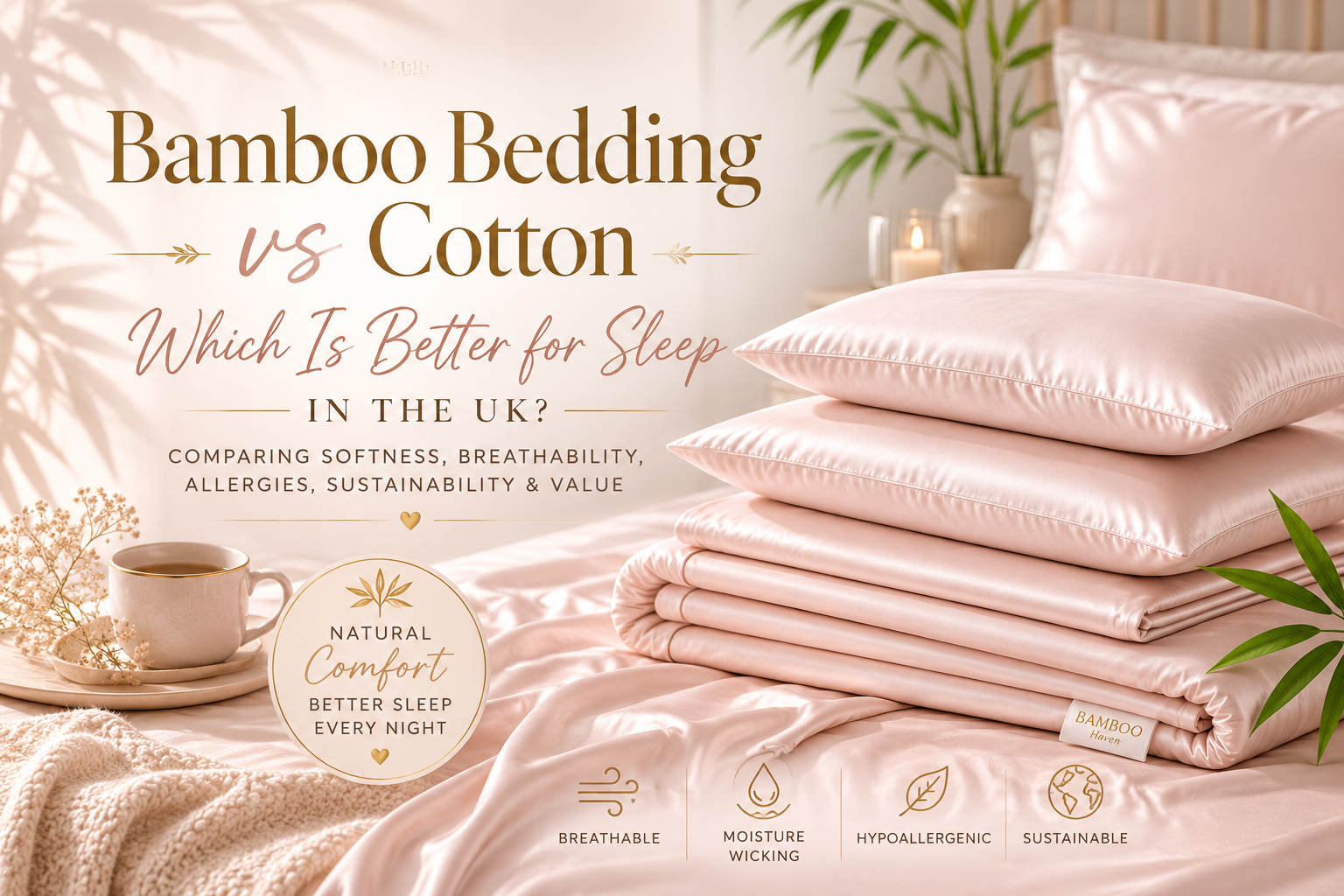
Bamboo Bedding vs Cotton: Which Is Better for Sleep in the UK?
If you have spent any time shopping for new bedding recently, you will have noticed that bamboo has become a serious rival to cotton on the shelves of UK retailers. Once considered a niche alternative, bamboo viscose bedding is now a mainstream choice for sleepers who want more than ordinary comfort. But is it genuinely better than cotton, or is the hype partly marketing? This guide gives you a clear, honest, evidence-based comparison so you can choose with confidence.
What Is Bamboo Bedding Made From?
Bamboo bedding — such as the collection available at Bamboo Haven — is made from bamboo viscose, a fabric produced by dissolving bamboo plant pulp into fine fibres that are then spun into yarn and woven into fabric. The result is a textile that retains bamboo's naturally impressive properties: fine fibre structure, excellent breathability, and strong moisture management. Bamboo Haven uses 100% bamboo viscose throughout its entire range, with no synthetic blends, and every product carries OEKO-TEX Standard 100 certification, independently verifying it is free from over 100 harmful substances.
Cotton, by contrast, is a seed fibre harvested from the cotton plant. It has been used in bedding for centuries and remains the most widely used natural textile in the world. Egyptian cotton, pima cotton, and percale cotton are among the most common premium varieties available to UK shoppers today.
Temperature Regulation: Where Bamboo Has a Clear Advantage
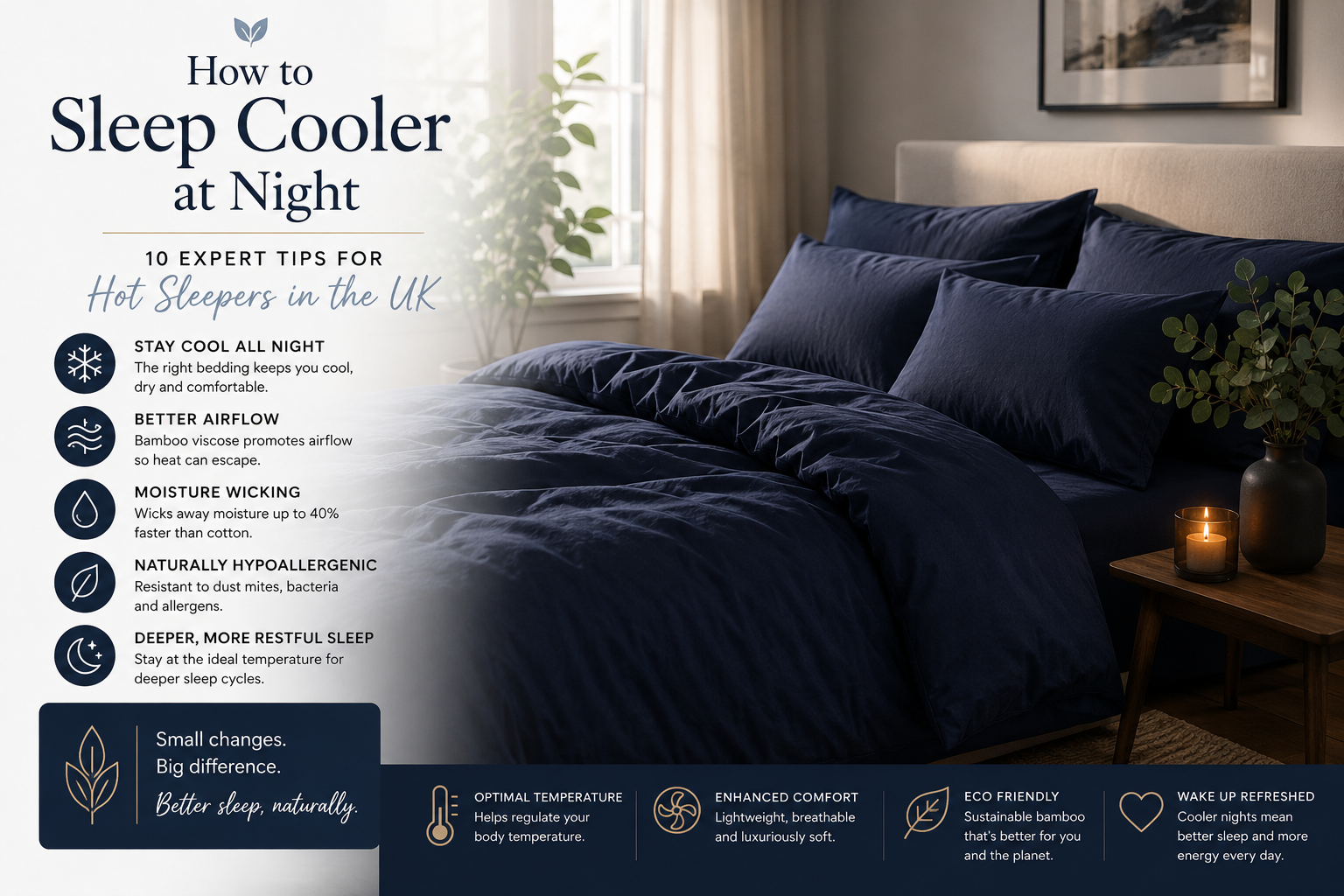
One of the most frequently cited reasons UK sleepers make the switch to bamboo is temperature. Bamboo viscose fibres contain a naturally occurring micro-gap structure that promotes active airflow through the fabric. Rather than trapping body heat the way denser cotton weaves tend to do, bamboo bedding allows heat to escape continuously as you sleep. For the significant proportion of UK adults who describe themselves as hot sleepers, or who wake overheated during warmer months, this makes a practical, measurable difference.
Cotton's breathability varies widely depending on weave and thread count. Percale cotton tends to be reasonably breathable, while sateen-weave cotton and very high thread count sets can trap considerably more heat. In general, even a good quality cotton cannot match the airflow properties of bamboo viscose at an equivalent price point.
Bamboo Haven's bedding is also thermoregulating in the truest sense — the fibre structure responds to changes in body temperature, helping maintain a more consistent sleep environment across the night rather than requiring you to kick off the duvet in the small hours.
Softness: How Do They Compare?
Both bamboo and cotton can feel luxuriously soft. The difference lies in trajectory. Cotton typically starts soft, maintains that softness reasonably well, and eventually begins to stiffen or pill after repeated washing. Bamboo viscose starts soft and continues to improve with every gentle wash cycle, becoming progressively more silky as the fibres relax over time.
Bamboo Haven's 300 thread count bamboo viscose is consistently compared by customers to 1,500 thread count Egyptian cotton in terms of how it feels against the skin. The fineness of the bamboo fibre creates minimal surface friction, giving the fabric a silky, smooth quality that standard cotton cannot replicate without significant investment.
For beauty-conscious sleepers or those who wake with hair or skin that feels dry and irritated, the reduced friction of bamboo viscose is a meaningful benefit. Cotton's slightly rougher fibre surface creates more friction overnight, which can contribute to hair breakage and skin irritation during sleep.
Moisture Wicking: Staying Dry Through the Night
Bamboo viscose absorbs moisture and releases it into the surrounding air up to 40% faster than cotton, according to fabric performance data. In practical terms, this means that when you sweat during sleep — which everyone does to some degree — bamboo bedding pulls that moisture away from your skin quickly and disperses it, leaving you drier and more comfortable than cotton typically manages.
This property is particularly valuable for people who experience significant night sweats, including those going through menopause, those with certain medical conditions, or simply people who sleep hot by nature. It also makes bamboo bedding less hospitable to bacteria and odour between washes, contributing to a fresher sleep environment overall.
Hypoallergenic Properties: Important for Sensitive Sleepers
Cotton is generally considered well-tolerated and not particularly irritating for most skin types. However, it is not inherently resistant to dust mites, and lower quality cotton fabrics can be treated with finishing chemicals that cause irritation. Cotton bedding also holds moisture close to the skin for longer periods, creating conditions that can aggravate eczema and other skin conditions.
Bamboo viscose is naturally resistant to dust mites and bacteria, making it a meaningfully different proposition for allergy sufferers. Combined with its breathability and moisture-wicking properties, it creates a sleep environment that is less likely to trigger or worsen skin conditions, asthma, or allergic reactions. Patricia D. from Birmingham, a verified Bamboo Haven customer, reported less congestion and improved sleep within two weeks of switching from cotton to bamboo bedding.
Bamboo Haven's OEKO-TEX Standard 100 certification provides an additional assurance that goes beyond the inherent properties of bamboo — every component of every product has been independently tested and verified to be free from allergenic dyes, heavy metals, formaldehyde, and other substances that can trigger reactions in sensitive individuals.
Durability: Which Lasts Longer?
High quality cotton is durable. A well-made set of Egyptian cotton sheets, cared for correctly, can last a decade or more. Bamboo viscose, when properly cared for with gentle washing at 30-40 degrees and air drying where possible, is equally durable and maintains its softness in a way that cotton rarely matches. The key with bamboo is avoiding high heat — tumble drying on high or washing at elevated temperatures can weaken fibres more quickly than with cotton.
Bamboo Haven customers consistently report that their bedding remains in excellent condition after months of regular use, noting that it washes well and continues to soften rather than stiffen — an experience that is rarer with cotton.
Environmental Impact: Bamboo's Strongest Card
Bamboo is one of the most sustainable raw materials on Earth. It grows at remarkable speed, reaching maturity in three to five years and regenerating from its root system without replanting. It requires no irrigation in most growing regions and no pesticide treatment. Cotton, by contrast, is one of the most water-intensive agricultural crops in the world, requiring approximately 10,000 litres of water per kilogram, and accounts for a disproportionately high share of global pesticide use.
The viscose manufacturing process does involve chemical treatment, but responsible producers use closed-loop systems that recapture and recycle solvents. OEKO-TEX certification verifies the safety of the finished fabric regardless of process. For consumers weighing environmental impact, bamboo has a clear advantage at the raw material stage.
When Might Cotton Still Be the Right Choice?
Cotton is not without genuine strengths. It is widely available, very familiar, and easy to care for with less risk of damage from occasional higher-temperature washing. At entry-level price points, cotton is often less expensive than bamboo — though the gap narrows at mid-range quality levels. If you sleep cold and prefer a weightier, crispier feel, cotton percale may suit your preferences better. Cotton also tends to be more widely available in a broader range of colours and patterns if aesthetics are your primary driver.
The Verdict
For the majority of UK sleepers — particularly those who run warm, have sensitive skin, struggle with allergies, or simply want bedding that improves with age rather than deteriorating — bamboo viscose outperforms cotton across every meaningful measure. Temperature regulation, moisture management, hypoallergenic properties, softness trajectory, and environmental impact all favour bamboo.
Bamboo Haven's 100% bamboo viscose bedding, OEKO-TEX certified and available in a range of sizes and colours, represents what a genuine upgrade from cotton looks and feels like. Starting with a set of pillowcases will tell you everything you need to know within a single night.
Which Bedding Piece Should You Switch First?
If the cost of replacing an entire bedding set in one go feels like a big step, you do not need to make the switch all at once. Pillowcases are the most practical starting point: they are the cheapest single item to buy, they sit in the most direct contact with facial skin and hair of any bedding piece, and they make the difference between bamboo viscose and cotton immediately obvious within a single night. Many first-time buyers order a pair of pillowcases specifically to test the fabric before committing to a fitted sheet, duvet cover, or full set.
Fitted sheets are the next logical upgrade, since they carry the most sustained body contact of any bedding item and are where breathability and moisture-wicking make the most practical difference to how you actually sleep. Duvet covers matter more for overall bedroom aesthetics and the feel of the layer above you, but contribute comparatively less to temperature regulation than the sheet you are lying directly on. Building a full bamboo bedding wardrobe piece by piece, starting with pillowcases and fitted sheets, is a sensible and affordable way to experience the benefits before investing in the complete range.
A Note on Blended and Budget Bamboo Products
Not every product labelled bamboo delivers the properties discussed in this guide. A meaningful share of budget bamboo bedding on the UK market is blended with polyester or other synthetic fibres, sometimes at 30% or more of the total fabric composition. These blends are cheaper to produce but noticeably less breathable, less soft, and less effective at moisture-wicking than 100% bamboo viscose, since the synthetic content works directly against the properties that make bamboo worth choosing in the first place.
Checking the fabric composition listed on the product label — not just the word bamboo in the title — is the simplest way to avoid this pitfall. Bamboo Haven's entire range is made from 100% bamboo viscose with no synthetic blends, which is precisely why the comparison in this guide holds consistently across the whole collection rather than varying product by product.
Explore Bamboo Haven's full range of luxury bamboo viscose bedding at https://bamboohaven.co.uk