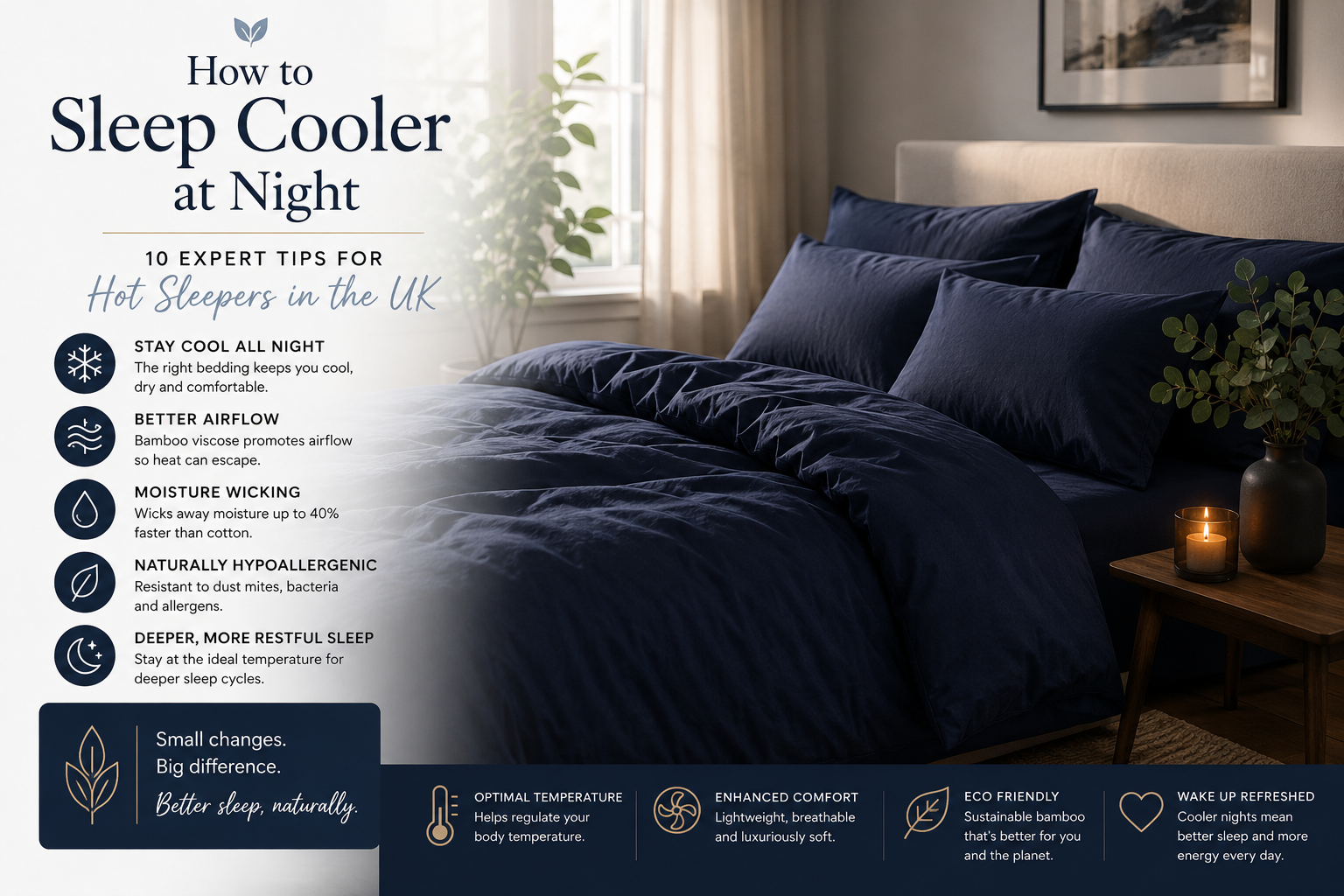
How to Sleep Cooler at Night: 10 Expert Tips for Hot Sleepers in the UK
Overheating at night is one of the most common sleep complaints in the UK. Whether you are a naturally hot sleeper, going through menopause, dealing with a summer heatwave, or simply sleeping in a room that retains the day's warmth long after sunset, the impact on sleep quality is significant. When your body cannot cool down sufficiently, the deep, restorative stages of sleep become harder to reach and maintain. The good news is that practical, evidence-based solutions exist — and many of them are simpler than you might expect.
Why Body Temperature Matters So Much for Sleep
Sleep science is clear on one point: the body must cool down to sleep well. Core body temperature naturally drops by approximately one degree Celsius as you approach sleep, and maintaining this cooler temperature throughout the night is what allows you to reach and sustain the deep sleep stages where physical recovery, memory consolidation, and immune function all happen. When your sleeping environment — including your bedding — traps heat against your body, this natural cooling process is disrupted. You may find yourself waking more frequently, feeling restless without knowing why, or simply not feeling rested even after a full night in bed.
10 Evidence-Based Tips to Sleep Cooler Every Night
1. Upgrade to Bamboo Viscose Bedding
The single most impactful change most hot sleepers can make is replacing conventional cotton bedding with bamboo viscose. Bamboo viscose fibres contain a natural micro-gap structure that promotes continuous airflow through the fabric, allowing heat to dissipate rather than build up around your body. Bamboo Haven's 100% bamboo viscose bedding is up to three times more breathable than standard cotton and wicks moisture away from the skin significantly faster. For hot sleepers, this difference is felt from the very first night. Multiple Bamboo Haven customers describe it as the most effective change they made after years of trying mattress toppers, fans, and lower tog duvets.
2. Lower Your Bedroom Temperature Before Bed
The ideal sleeping temperature is between 16 and 18 degrees Celsius. Most UK homes run considerably warmer than this, particularly in spring and summer. Open bedroom windows in the early evening to allow cooler air to circulate before outside temperatures begin to fall overnight. If outdoor air is warmer than indoor air, keep windows closed during the day and open them after 9pm. A small desk or ceiling fan set to a low speed can also improve air circulation without creating an uncomfortable draught.
3. Use Lighter Layering
Rather than using a single heavy duvet year-round, consider a lighter tog duvet combined with a breathable bamboo comforter or sheet that you can adjust through the night. Layering gives you control over your temperature without the shock of throwing off the entire duvet and then becoming too cold. Bamboo Haven's bamboo viscose comforter is designed precisely for this purpose — light, breathable, and naturally temperature-regulating.
4. Take a Warm Shower Before Bed
This sounds counterintuitive but is supported by consistent research. A warm — not hot — shower or bath taken 60 to 90 minutes before sleep triggers the body's natural thermoregulatory response. Blood vessels in the skin dilate, releasing heat from the body's core. As you cool after the shower, your core temperature drops more rapidly than it would without it, signalling to the brain that it is time to sleep. The result is faster sleep onset and, in many cases, deeper early-night sleep.
5. Avoid Synthetic Nightwear
Polyester and nylon sleepwear trap heat against the body in the same way that synthetic bedding does. Lightweight cotton or bamboo-fibre nightwear allows the skin to breathe and works in harmony with breathable bedding to maintain a cooler microclimate. If you typically sleep in nothing, that is also an effective strategy — bamboo viscose sheets feel comfortable directly against bare skin without the friction some synthetic or rougher cotton fabrics create.
6. Block Out Heat During the Day
One of the most underestimated strategies for a cooler bedroom is simply blocking sunlight during the day. South or west-facing bedrooms can absorb enormous amounts of heat through uncovered windows during long summer days, with that heat radiating from walls, floors, and ceilings for hours after sunset. Heavy curtains, blackout blinds, or reflective window film can reduce bedroom temperature by several degrees by bedtime — a simple step that makes a real difference.
7. Upgrade Your Pillowcases
The head and neck generate a disproportionate amount of body heat during sleep, and a hot pillow is one of the most common minor sleep discomforts people describe. Bamboo Haven's bamboo viscose pillowcases stay noticeably cooler to the touch than cotton and actively wick moisture away from the face and neck throughout the night. Many customers who started with just the pillowcases describe the effect as immediate and compelling — and quickly ordered the full set.
8. Stay Hydrated Through the Evening
Mild dehydration raises core body temperature and makes the body less efficient at thermoregulation during sleep. Drink water consistently through the evening rather than a large glass immediately before bed, which would disrupt sleep with bathroom visits. A glass of cool water on the bedside table is useful for quick rehydration if you wake overheated during the night.
9. Avoid Alcohol and Heavy Meals Close to Bedtime
Alcohol is frequently misunderstood as a sleep aid. It does promote initial drowsiness, but it disrupts sleep architecture significantly, suppresses REM sleep, and raises core body temperature in the second half of the night — the opposite of what hot sleepers need. Heavy meals close to bedtime raise metabolic rate and generate significant body heat during digestion. Both are worth avoiding in the two to three hours before sleep if temperature is a concern.
10. Consider Separate Duvets for Couples
Sharing a bed with a partner means sharing body heat. The Scandinavian approach of using separate duvets for each sleeper is gaining popularity in the UK for good reason: each person can regulate their own temperature independently without compromise or disruption. Ben and Sarah W. from Daventry, verified Bamboo Haven customers, noted that one partner sleeping hot and one sleeping cold were both comfortable for the first time — a direct result of better temperature regulation within their bedding.
How the Right Bedding Changes Everything
Environmental adjustments — fans, open windows, lower room temperatures — all help, but they work against the fixed properties of heat-trapping bedding. If your sheets and duvet cover are trapping heat against your skin, improvements elsewhere are limited in their effect. Switching to bamboo viscose bedding addresses the problem at its source, creating a sleep surface that actively works with your body's thermoregulatory needs rather than fighting against them.
Tom R. from Worksop, a verified Bamboo Haven customer, described the difference as waking up cool, soft, and actually rested for the first time in years. Marcus T. from Manchester, who described trying mattresses, pillows, blackout blinds, and white noise before trying bamboo bedding, said it was the single biggest improvement he made — and that he had been sleeping through the night for the first time in years. These are not isolated accounts; they reflect a consistent pattern across Bamboo Haven's customer base.
Building Your Complete Cool-Sleep System
The most effective approach combines environmental strategies with the right bedding. Start with bamboo viscose sheets and pillowcases, which will demonstrate immediately what a difference breathable fabric makes. Add a lower tog duvet, manage daytime heat retention in your bedroom, and establish a consistent pre-sleep routine that supports the body's natural temperature drop. Combined, these changes can transform a night of restless overheating into genuinely restorative sleep — beginning from the very first night.
Cooling Strategies for Different Bedroom Types
Not every bedroom faces the same heat challenge, and tailoring your approach to your specific room makes a genuine difference. South or west-facing bedrooms that receive direct afternoon and evening sun typically retain far more heat than north-facing rooms, meaning daytime heat-blocking measures — blackout blinds, reflective window film, or simply keeping curtains closed during peak sun hours — matter considerably more for these rooms than for a naturally cooler, shaded bedroom.
Upstairs bedrooms in UK homes, particularly under an insulated loft, tend to run several degrees warmer than ground floor rooms, especially during summer heatwaves when heat rises and becomes trapped beneath the roofline. If you sleep in an upstairs room, prioritising a fan for active air circulation, alongside breathable bamboo viscose bedding, tends to deliver a more noticeable improvement than in a naturally cooler ground floor room. Smaller bedrooms with limited airflow also benefit disproportionately from a fan or a cracked window, since heat has fewer opportunities to dissipate naturally in a more enclosed space.
When to Consider Additional Cooling Solutions
For hot sleepers who have implemented the strategies above and still struggle with overheating, particularly during UK heatwaves when outdoor temperatures remain high well into the evening, additional active cooling may be worth considering. A dehumidifier can help in particularly humid bedrooms, since high humidity makes any given temperature feel considerably hotter and interferes with the body's own evaporative cooling through perspiration. Portable air conditioning units, while a bigger investment, provide the most direct and reliable temperature control for bedrooms that consistently struggle to reach a comfortable sleeping temperature through passive measures alone.
For most UK sleepers, however, the combination of breathable bamboo bedding, sensible daytime heat management, and a few of the behavioural strategies outlined above is sufficient to make a significant, noticeable difference — without the ongoing cost or environmental impact of running active cooling equipment through the summer months.
Discover Bamboo Haven's cooling bamboo bedding range at https://bamboohaven.co.uk