The Best Bedding for Sensitive Skin and Eczema: Why Bamboo Wins
If you or someone in your household has sensitive skin, eczema, psoriasis, or allergies, the fabric you sleep against for seven or eight hours every night matters enormously. Most people give careful thought to skincare products, moisturisers, and laundry detergents — but the bedding itself is often overlooked. Given that the average UK adult spends approximately a third of their life in bed, the cumulative effect of sleeping in contact with the wrong fabric is significant. This guide explains why bamboo viscose has become the bedding of choice for sensitive sleepers across the UK, and what the evidence actually says.
Why Bedding Can Trigger or Worsen Skin Conditions
Skin irritation from bedding can arise from several sources. Synthetic fibres such as polyester create friction and trap heat and moisture against the skin — conditions that are known to aggravate eczema and other inflammatory skin conditions. Even some natural fabrics can be problematic at lower quality levels, particularly if they are treated with finishing chemicals, optical brighteners, or allergenic dyes during manufacturing.
Dust mites are another significant factor. These microscopic organisms thrive in warm, humid bedding environments and are one of the most common triggers for asthma, rhinitis, and eczema flare-ups. A fabric that manages moisture effectively and resists dust mite colonisation offers a meaningfully different microenvironment from one that does not.
Heat and sweating are a further consideration. Overheating in bed raises skin temperature and induces perspiration, both of which lower the threshold for itch and inflammation in eczema-prone skin. A fabric that stays cool and dry throughout the night therefore provides genuine therapeutic benefit — not just comfort — for those managing skin conditions.
Why Bamboo Viscose Is Different
The Fibre Structure: Smooth, Round, and Gentle
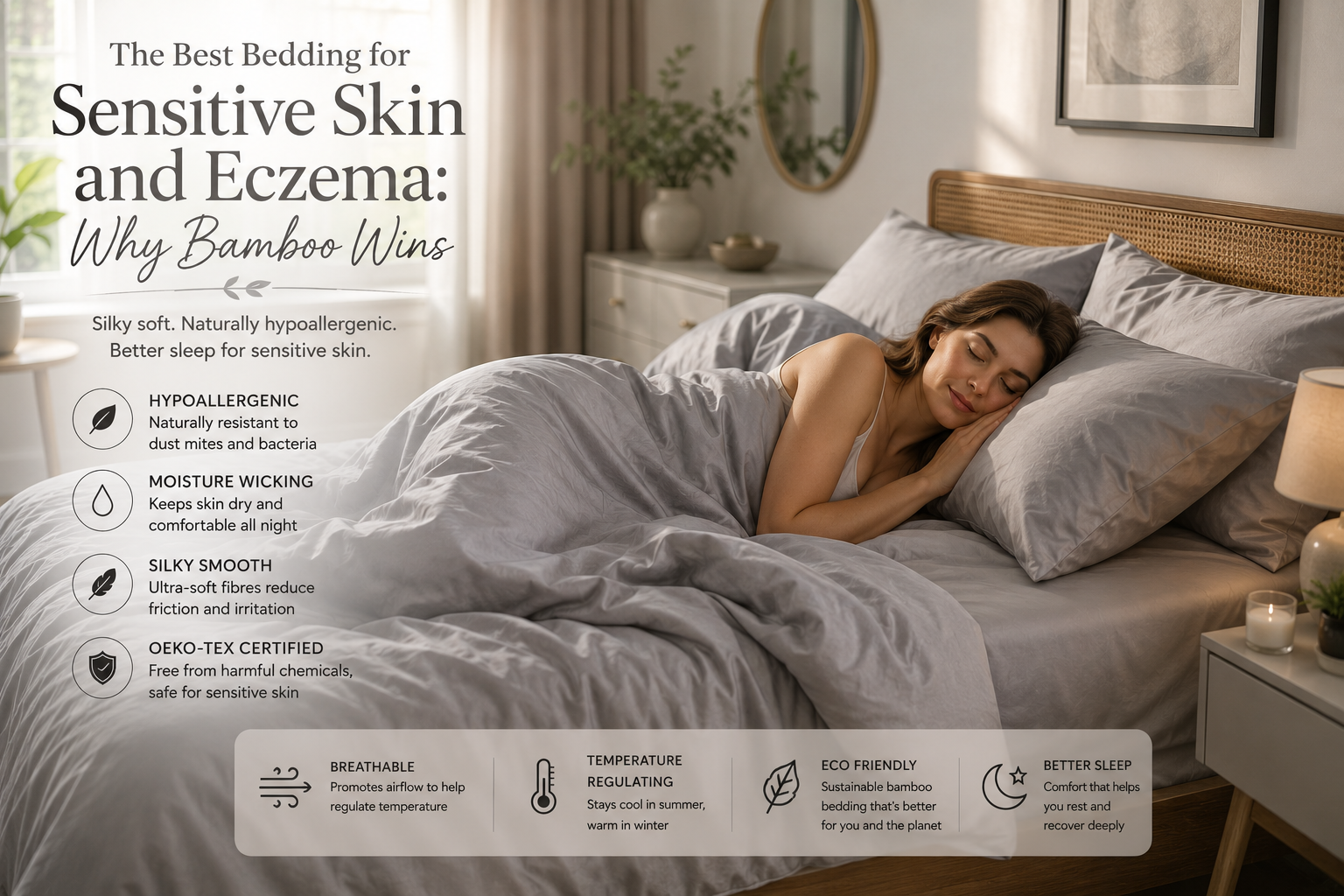
Bamboo viscose fibres are exceptionally fine and have smooth, rounded tips at a microscopic level. This means there are no sharp edges or rough surfaces to catch on or irritate sensitised skin. The resulting fabric has a silky texture that lies flat against the body, creating minimal friction during sleep. For those with active eczema, where even slight mechanical irritation can trigger a flare, this is a meaningful structural advantage over rougher or more textured fabrics including standard cotton.
Hypoallergenic Properties
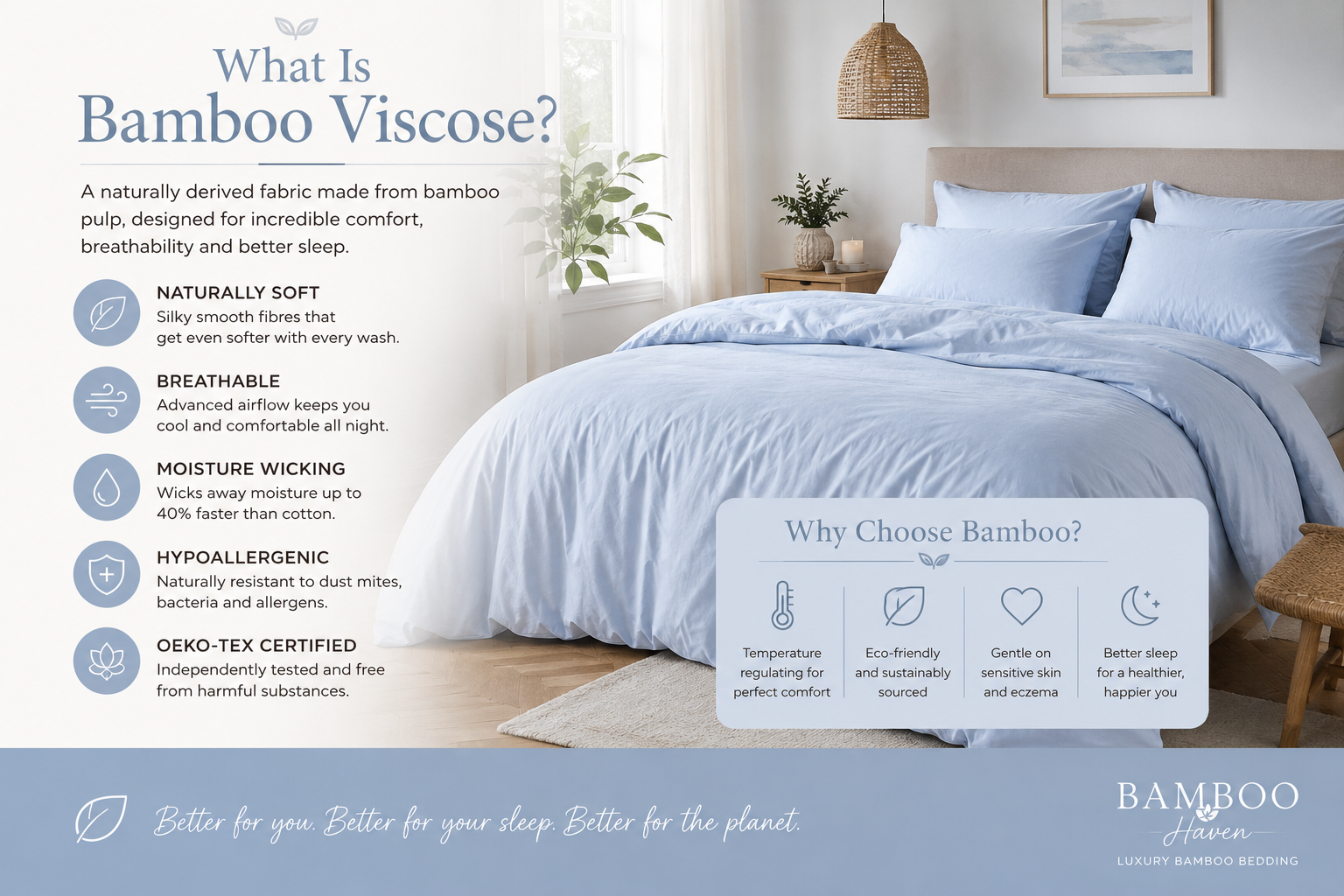
Bamboo viscose is naturally resistant to dust mites and bacteria. Unlike synthetic fabrics that can harbour allergens in their fibres, bamboo viscose creates a cleaner microenvironment that is less hospitable to the organisms most associated with allergic skin and respiratory reactions. For those whose eczema or asthma is triggered or worsened by dust mite exposure, this is one of the most practically important properties bamboo bedding offers — one that works continuously and without any additional treatment.
Temperature and Moisture Management
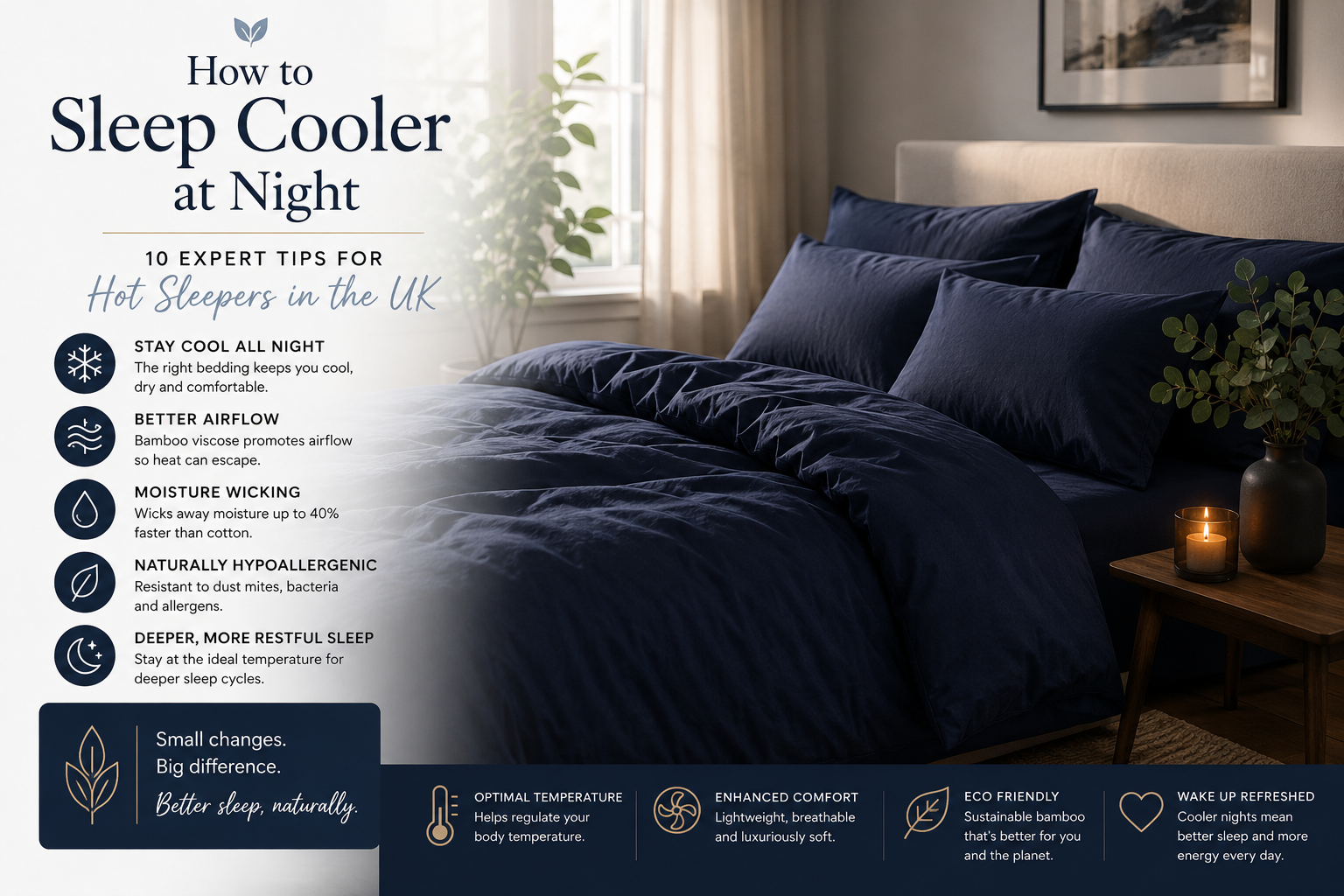
Perhaps the most clinically relevant property of bamboo viscose for sensitive skin sufferers is its combination of breathability and moisture management. The fabric actively wicks perspiration away from the skin and disperses it into the air, preventing the hot, damp conditions that are a well-documented trigger for eczema flare-ups. The breathable fibre structure also prevents heat from building up at the skin surface, further reducing inflammatory triggers through the night.
OEKO-TEX Certification: Chemical Safety You Can Verify
Not all bamboo bedding is created equal. The OEKO-TEX Standard 100 certification carried by every Bamboo Haven product provides independent verification — not manufacturer claims — that the fabric is free from over 100 potentially harmful substances. This includes formaldehyde, heavy metals, allergenic dyes, and residual pesticides. For anyone with skin that reacts to chemical exposure, this independent certification is the most reliable assurance available in the UK bedding market.
Real Experiences from UK Sensitive Skin Sufferers
The customer reviews published on Bamboo Haven's website — described as unedited and from verified purchasers — paint a consistent picture. Patricia D. from Birmingham, who has allergies and asthma, reported less congestion within two weeks of switching to Bamboo Haven bedding, describing it as genuinely hypoallergenic and luxurious rather than clinical. Rachel F. from Grimsby, who describes having mild eczema and being a hot sleeper, noted measurable improvements across all three complaints — heat, eczema, and sleep quality — after purchasing the full set.
These are not isolated experiences. The pattern of improvement reported by customers with skin conditions is consistent with what the properties of bamboo viscose would predict: a cooler, drier, lower-friction sleep surface that is resistant to the dust mites and chemical irritants most associated with sensitive skin flare-ups. It is also consistent with what sleep medicine specialists recommend for eczema management: a breathable, hypoallergenic, low-friction sleep environment.
Comparing Fabric Options for Sensitive Skin
• Polyester and microfibre: Poor breathability, chemical finishing common, highest friction — avoid for sensitive skin
• Standard cotton: Generally tolerated but variable quality; denser weaves trap heat and moisture; not dust mite resistant
• Egyptian cotton (high thread count): Softer than standard cotton but still outperformed by bamboo viscose for temperature and moisture management
• Linen: Breathable but often too coarse in texture for eczema-prone or sensitised skin
• Silk: Smooth and cool but high maintenance, expensive, and lacks the moisture-wicking properties of bamboo viscose
• Bamboo viscose: Smooth texture, naturally hypoallergenic, breathable, moisture-wicking, independently certifiable — strongest all-round choice for sensitive skin
Caring for Bamboo Bedding to Protect Sensitive Skin
To maintain both the fabric quality and its hypoallergenic properties, wash bamboo bedding at 30-40 degrees on a gentle cycle using a mild, fragrance-free detergent. Avoid biological detergents containing enzymes, fabric softeners, and bleaching agents. Wash pillowcases every two to three days if skin conditions are active — they accumulate the most skin cells, oils, and moisture. Air dry where possible to preserve the fabric and avoid any residual heat damage that might affect fibre integrity.
The combination of frequent pillowcase replacement and bamboo viscose's natural bacterial resistance creates the cleanest possible microenvironment for sensitive facial skin — reducing the allergen load and friction that accumulates overnight and can worsen conditions by morning.
The Bamboo Haven Range for Sensitive Sleepers
Bamboo Haven's complete bedding collection — including fitted sheets, duvet covers, pillowcases, pillows, and comforters — is made entirely from 100% bamboo viscose with no synthetic blends. The wooden buttons on duvet covers replace plastic, maintaining the commitment to natural materials throughout every component. Every product is OEKO-TEX Standard 100 certified. The collection is available in a range of calming tones — soft beige, sage green, blush pink, ice blue, and navy — designed to complement the kind of calm, low-stimulation sleep environment that sensitive skin sufferers are often advised to create.
Patch Testing and Introducing New Bedding Safely
Even with a fabric as well-tolerated as bamboo viscose, anyone with a history of significant skin reactions or contact allergies may want to introduce new bedding gradually rather than switching an entire bed at once. A practical approach is to begin with a single pillowcase, used for a few nights, while monitoring skin response before committing to a full set. This is particularly relevant for anyone with a known sensitivity to a specific dye or finishing chemical, since it allows any reaction to be identified and addressed early, with minimal cost or inconvenience.
It is also worth washing any new bedding before first use, even OEKO-TEX certified products, simply as good general practice for sensitive skin. A first gentle wash at 30-40 degrees removes any residual manufacturing dust or packaging residue and allows the fabric to begin softening from the very first use, rather than being introduced to the skin in its factory-fresh state.
Bamboo Bedding for Children with Sensitive Skin
Childhood eczema is extremely common in the UK, affecting a significant proportion of children at some point before adolescence, and the bedding a child sleeps in matters just as much — arguably more — than it does for adults, given how much of a young child's day is spent asleep. The same properties that make bamboo viscose suitable for adult sensitive skin apply directly to children: a smooth, low-friction fibre structure, natural resistance to dust mites, and breathability that helps prevent the overheating that so often triggers night-time scratching and disrupted sleep in eczema-prone children.
OEKO-TEX Standard 100 certification carries particular weight for children's bedding, since younger skin is generally more permeable and more sensitive to chemical exposure than adult skin. Parents choosing bedding for a child with eczema or generally sensitive skin should look for the same certification and 100% bamboo viscose composition recommended throughout this guide, and should introduce new bedding using the same gradual, patch-tested approach described above — particularly for children with a known history of reacting to new fabrics or products.
Working With Your GP or Dermatologist
Bedding choice is a genuinely valuable supportive measure for sensitive skin and eczema, but it works best alongside, not instead of, appropriate medical guidance. Anyone with a diagnosed skin condition, or symptoms significant enough to affect daily life or sleep quality, should continue working with a GP or dermatologist for a full treatment plan, using improved bedding as one practical element within that wider approach rather than a standalone solution. Bringing a record of when flare-ups occur, and what bedding and laundry products were in use at the time, can be genuinely useful information to share at a consultation, helping to identify patterns that might not be obvious from memory alone.
It is also worth remembering that skin conditions can have multiple contributing factors beyond bedding — stress, diet, weather, and skincare routine among them — so while a switch to genuinely breathable, certified bedding is a sensible and evidence-consistent step, it should be viewed as one part of a broader picture rather than a guaranteed fix on its own.
Shop hypoallergenic bamboo viscose bedding at https://bamboohaven.co.uk