What Is Bamboo Viscose? Everything You Need to Know About This Luxury Fabric
Walk into any bedding shop or browse any premium sleep brand in the UK and you will quickly encounter the term bamboo viscose. It appears on labels, in product descriptions, and in marketing claims ranging from the accurate to the exaggerated. But what does bamboo viscose actually mean? How is it made? What makes it different from other bamboo fabrics — and from cotton? And how do you know if the product you are buying is the real thing? This guide covers everything you need to know about bamboo viscose fabric honestly and in full.
Understanding Bamboo Fabrics: Not All Are the Same
The term bamboo fabric covers several distinct manufacturing processes that produce very different end products. Understanding the differences matters because they affect both the feel of the fabric and its environmental credentials.
- Bamboo viscose (also called bamboo rayon): The most widely used type of bamboo fabric in premium bedding. Made by dissolving bamboo pulp chemically and extruding it into fibres. Produces a very soft, silky, breathable fabric.
- Bamboo lyocell: Made via a newer, more environmentally closed-loop chemical process. Less common and typically more expensive. Similar feel to bamboo viscose with slightly better environmental credentials at the manufacturing stage.
- Bamboo linen (bamboo bast fibre): Produced mechanically by crushing bamboo stalks and using natural enzymes to break down the plant matter into fibres. Coarser than viscose and less common in mainstream bedding.
- Bamboo blends: Many products labelled as bamboo contain significant proportions of polyester or other synthetic fibres. These are inferior to 100% bamboo viscose in terms of breathability, softness, and environmental impact.
How Is Bamboo Viscose Made?
The production of bamboo viscose follows a process similar to conventional viscose but uses bamboo plant matter as the raw material instead of wood pulp. The key stages are as follows. First, bamboo is harvested and processed into bamboo pulp — the plant's cellulose content. This pulp is dissolved in a chemical solvent to create a thick, viscous liquid. This liquid is then forced through extremely fine nozzles — a process called extrusion — to create long, continuous filaments. These filaments are hardened in an acid bath, washed, and then spun into yarn. The yarn is woven or knitted into fabric, which is then finished, dyed, and inspected before being made into bedding.
The chemical stage of this process is the primary environmental consideration with bamboo viscose. In less responsible facilities, spent chemicals can be released as effluent. In responsible, certified production, chemicals are captured and recycled in closed-loop systems. The most consumer-relevant verification of responsible production is OEKO-TEX Standard 100 certification, which confirms the finished fabric is safe regardless of what happened during production.
What Makes Bamboo Viscose So Good for Bedding?
Exceptional Softness That Improves Over Time
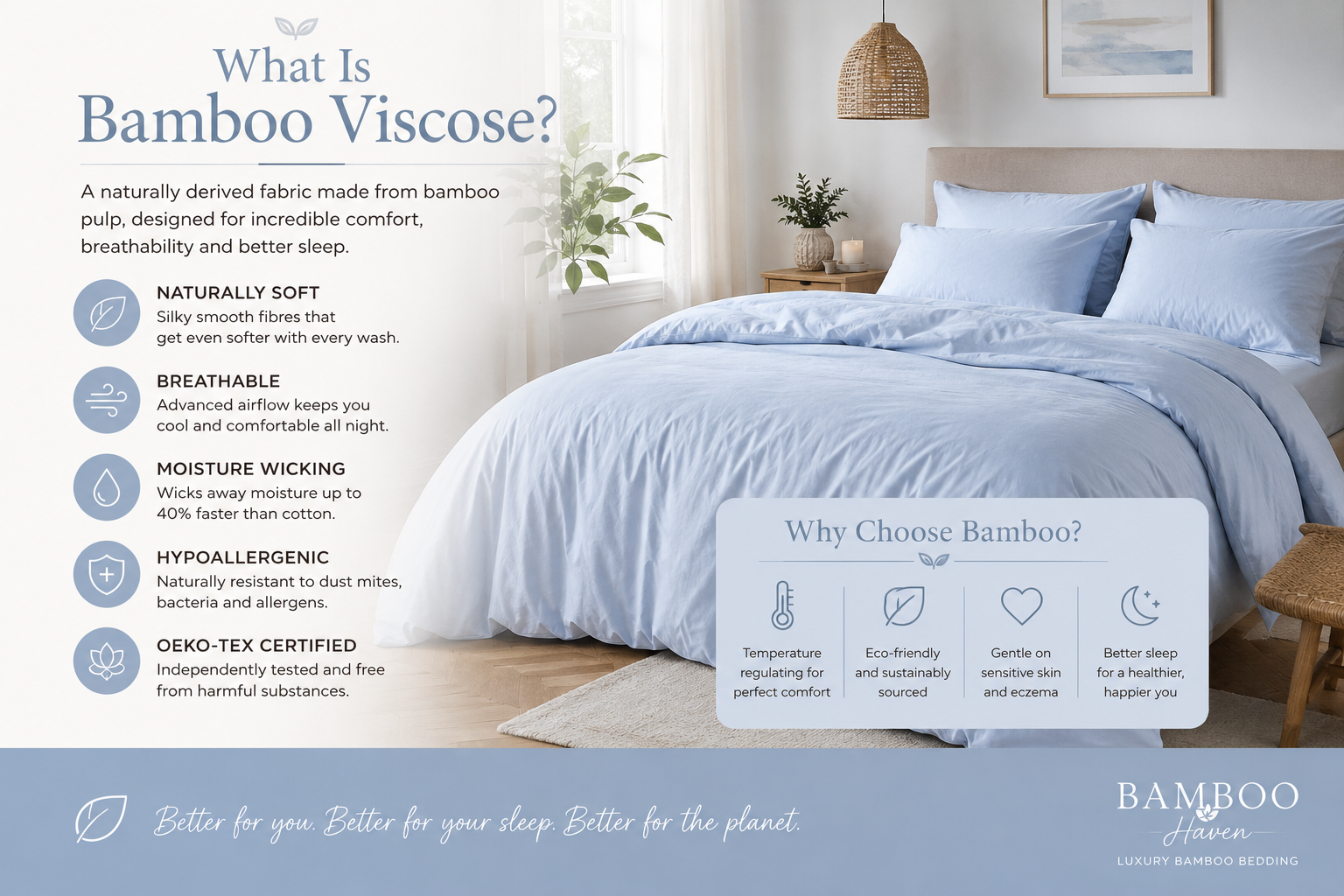
Bamboo viscose fibres are among the finest available in natural textile production. Their diameter is considerably smaller than cotton fibres, which means more threads can be woven into the same space, and the resulting fabric surface has fewer raised edges to catch on skin. The practical result is a silky, smooth texture that many sleepers describe as immediately noticeable — and unlike other soft fabrics, this softness increases with washing rather than diminishing. Bamboo Haven's customers consistently note that their bedding is measurably softer after six months of use than it was when new.
Natural Thermoregulation
The micro-gap structure within bamboo viscose fibres creates natural channels for airflow through the fabric. This is not a treatment applied during manufacturing — it is a property of the fibre itself, which means it persists through washing and age. The result is a fabric that is continuously breathable, allowing heat to escape from around the body rather than building up between you and the bed. This thermoregulating property is why bamboo viscose bedding is so frequently described as feeling cool in summer and not uncomfortably cold in winter.
Moisture Management
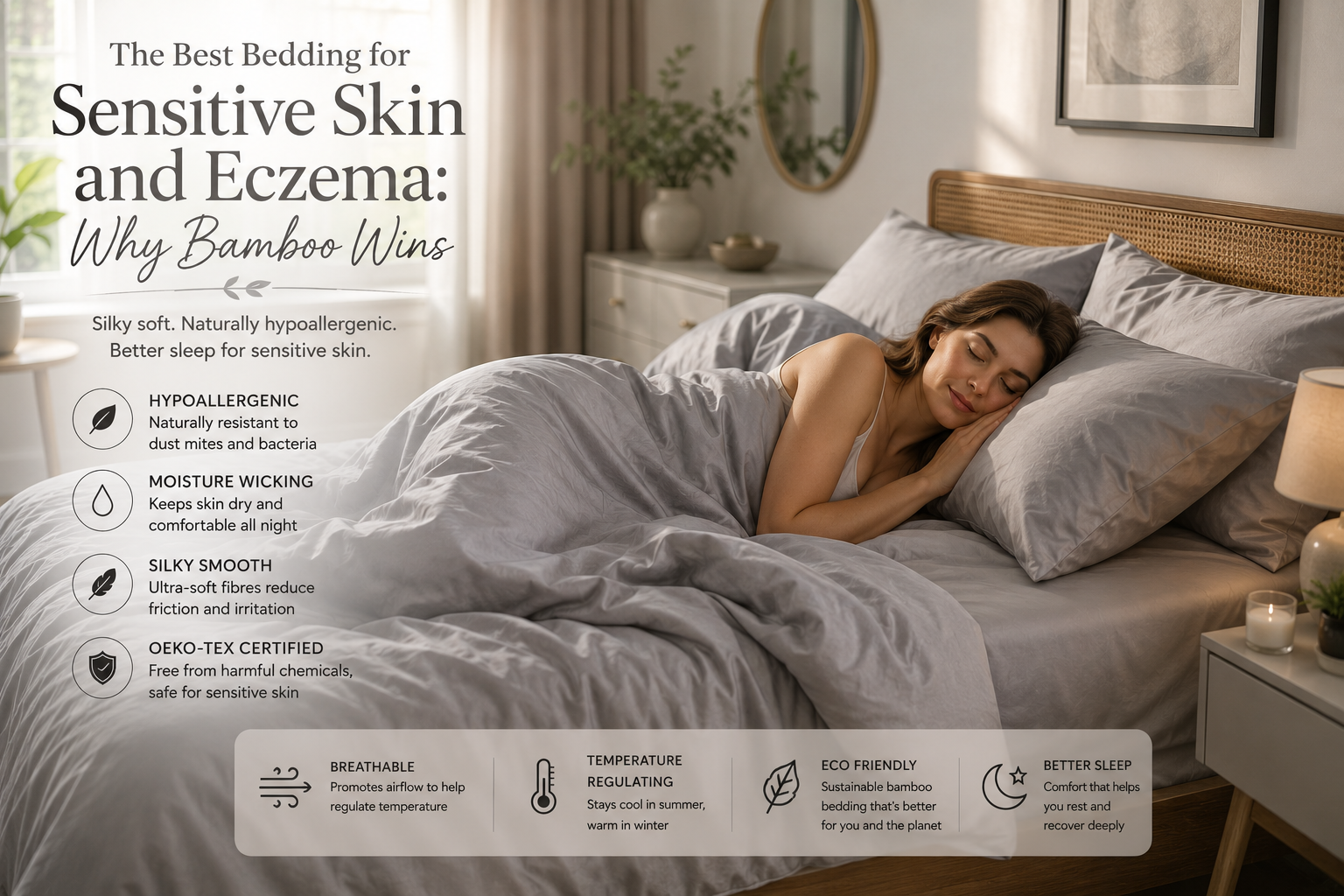
Bamboo viscose absorbs moisture and wicks it away from the skin surface significantly faster than cotton. For anyone who experiences night sweats, sleeping hot, or simply the normal perspiration that occurs during sleep, this means waking up drier and more comfortable. It also means the fabric stays fresher for longer between washes, as rapid moisture dispersal inhibits the bacterial growth that causes fabric odour.
Hypoallergenic by Nature
Bamboo viscose is naturally resistant to dust mites and bacteria due to its fibre structure and moisture management properties. This makes it significantly more suitable for allergy sufferers, asthmatics, and those with eczema or sensitive skin than many alternative fabrics. Bamboo Haven's OEKO-TEX Standard 100 certification provides additional verified assurance that the fabric contains no harmful chemical residues.
Bamboo Viscose vs Egyptian Cotton: A Direct Comparison
- Softness at first use: Both are soft; bamboo viscose feels silkier due to finer fibre diameter
- Softness over time: Bamboo viscose continues to improve; cotton quality is maintained or gradually declines
- Breathability: Bamboo viscose is significantly more breathable
- Moisture wicking: Bamboo viscose is considerably faster at dispersing moisture
- Hypoallergenic: Bamboo viscose has natural resistance; cotton does not
- Thread count comparison: 300 TC bamboo viscose is comparable to 1,500 TC Egyptian cotton in softness
- Price: Comparable at mid-range; bamboo offers more value per performance metric
How to Care for Bamboo Viscose Bedding
Bamboo viscose rewards gentle care. Wash at 30-40 degrees on a delicate cycle using a mild, fragrance-free detergent. Avoid fabric softeners — the fabric maintains its natural softness without them, and fabric softeners coat fibres and reduce breathability. Air dry where possible, or tumble dry on the lowest heat setting. Do not bleach or iron on high heat. With proper care, bamboo viscose bedding maintains its quality and performance through years of regular use, getting better rather than worse with age.
What to Look for When Buying Bamboo Viscose Bedding
When shopping for bamboo viscose bedding, look for products that clearly state 100% bamboo viscose on the label with no synthetic blends, carry verifiable OEKO-TEX Standard 100 certification, and are made by brands that provide transparent information about their products. Avoid claims of thread counts above 600 for bamboo products — these are almost always misleading. Bamboo Haven's 300 thread count specification is chosen for the optimal balance of softness, durability, and breathability — an honest figure that reflects genuine quality.
Why Bamboo Haven Uses 100% Bamboo Viscose
Bamboo Haven's entire bedding range is made from 100% bamboo viscose with no synthetic blends. This commitment matters because blended fabrics reduce breathability, introduce plastic microfibres into wash water, and often feel noticeably inferior to pure bamboo viscose. The 300 thread count specification is chosen to deliver the optimal balance of softness, durability, and breathability. Every product is OEKO-TEX Standard 100 certified — independently verified to be free from over 100 harmful substances.
Bamboo Viscose vs Bamboo Lyocell: Which Should You Choose?
Shoppers researching bamboo fabric often encounter both bamboo viscose and bamboo lyocell and are unsure which represents the better choice. Both fabrics start from the same raw material — bamboo cellulose — but are processed using different chemical methods. Bamboo lyocell uses a solvent that is recovered and reused at a very high rate within a closed-loop system, giving it a somewhat stronger environmental profile at the manufacturing stage specifically. Bamboo viscose, produced through the more established and widely available process described earlier in this guide, delivers a comparably soft, breathable, silky fabric, and remains by far the more common and more affordably priced option across the UK bedding market.
In practice, the feel and performance difference between a genuinely well-made bamboo viscose product and a bamboo lyocell equivalent is subtle rather than dramatic. For most buyers, the more important distinction is not viscose versus lyocell, but certified versus uncertified, and 100% bamboo versus a synthetic blend — the factors that most directly affect softness, breathability, and safety regardless of which specific bamboo process was used.
Common Myths About Bamboo Viscose, Debunked
A few persistent myths circulate about bamboo fabric that are worth addressing directly. The claim that bamboo fabric retains natural antibacterial properties from the living plant after processing is frequently repeated but not well supported once the bamboo has been through the chemical viscose process — the fabric's resistance to bacteria and odour is better explained by its moisture-wicking performance, which creates an environment less hospitable to bacterial growth, rather than any antibacterial compound surviving intact from the raw plant.
Another common myth is that all bamboo fabric is equally eco-friendly regardless of how it is processed. As this guide has explained, the manufacturing stage introduces real variation in environmental impact depending on how responsibly a specific facility manages its process chemicals — meaning the bamboo plant's genuine sustainability credentials do not automatically transfer to every finished bamboo fabric product without responsible, certified manufacturing behind it. Buyers who understand this distinction are better placed to evaluate bamboo products honestly rather than relying on the word bamboo alone as a guarantee of quality or sustainability.
A third myth worth addressing is the assumption that bamboo fabric is inherently fragile because it starts life as a rigid, woody plant. In reality, once processed into viscose fibre, bamboo is comparably durable to good quality cotton, and with the correct gentle care outlined earlier in this guide, it holds up to years of regular washing and use without the stiffening or pilling that lower-quality fabrics often develop.
Explore Bamboo Haven's 100% certified bamboo viscose collection at https://bamboohaven.co.uk