Dust Mites, Allergies and Your Bedding: What You Need to Know
Dust mites are among the most common household allergy triggers, and bedding is one of the primary environments where they thrive, given the warmth, humidity and abundant food source — shed human skin cells — that a regularly used bed provides. Understanding how dust mites actually behave, and what genuinely helps reduce exposure, provides a considerably more effective approach than relying on vague “hypoallergenic” marketing claims alone.
What Dust Mites Actually Are and Why Bedding Attracts Them
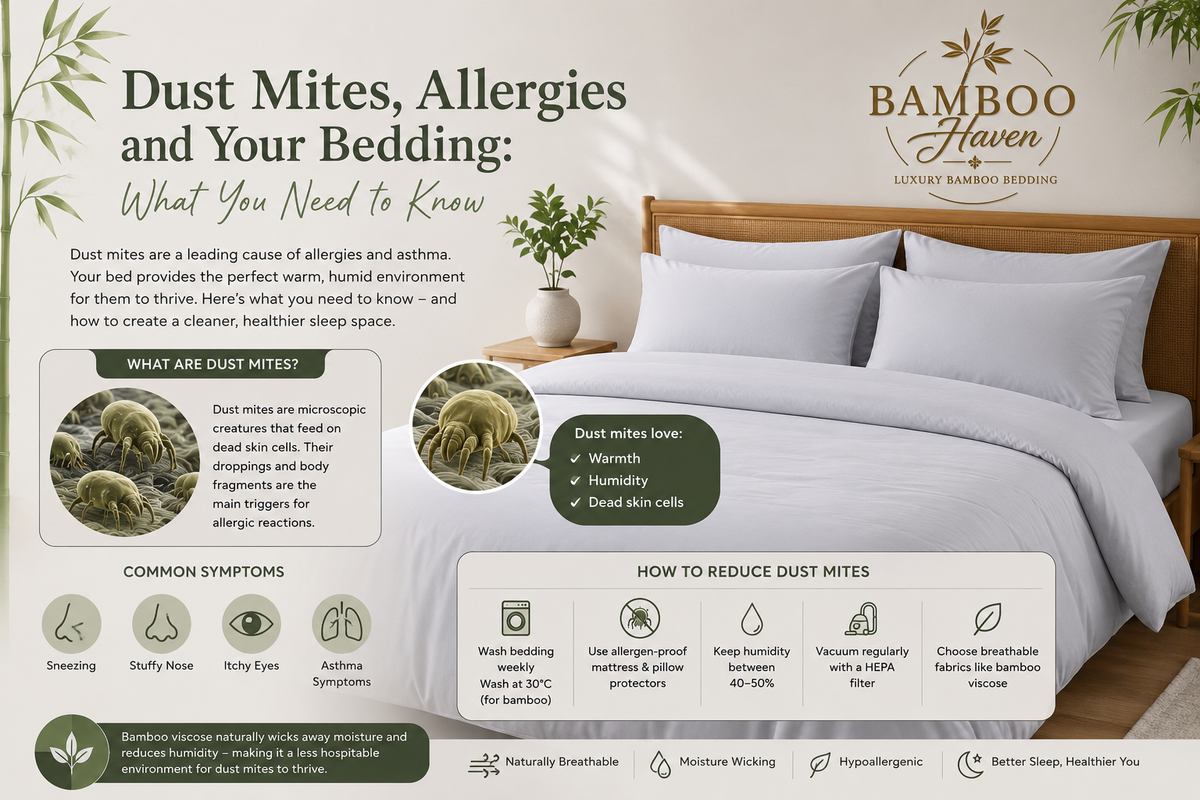
Dust mites are microscopic arachnids, invisible to the naked eye, that feed primarily on shed human and pet skin cells and thrive in warm, humid environments. A typical bed, warmed by body heat overnight and receiving a steady supply of shed skin cells, provides close to ideal conditions for dust mite populations to establish and grow, which is why bedding — mattresses, pillows and duvets in particular, given how infrequently these are laundered compared with sheets — is one of the most significant sources of household dust mite allergen exposure for most people.
It is worth understanding that dust mites themselves are not typically the direct allergy trigger; rather, proteins present in dust mite droppings and body fragments are the specific allergens that trigger allergic reactions in sensitised individuals, ranging from mild sneezing and congestion through to more significant asthma symptoms in people with dust mite-triggered asthma.
Why Humidity and Moisture Matter So Much
Dust mites require a reasonably humid environment to thrive, generally struggling to survive in genuinely dry conditions. This is precisely why moisture management within bedding is such a genuinely relevant factor for anyone managing dust mite allergies, beyond simply choosing a fabric marketed as “hypoallergenic” without understanding the underlying mechanism. Bedding that traps moisture — whether from overnight sweating or general ambient humidity — creates a more hospitable environment for dust mites, while bedding that actively wicks moisture away and supports drying, such as genuinely breathable bamboo viscose, works against the humid conditions dust mites depend on to thrive.
This connects directly to the broader breathability discussion throughout our other guides: a fabric’s moisture-wicking performance is not simply a comfort feature, it has a genuine, mechanistically explainable relevance to dust mite populations within your bedding.
Also Read: How to Sleep Cooler at Night: 10 Expert Tips for Hot Sleepers in the UK
Does Bamboo Viscose Have Genuine Dust Mite Resistance?
Bamboo viscose is frequently cited as naturally more resistant to dust mites than many alternative fabrics, and the reasoning behind this claim connects to the moisture and humidity discussion above: by supporting better moisture management and reduced humidity within the fabric compared with less breathable alternatives, bamboo viscose creates a somewhat less hospitable environment for dust mites to thrive, compared with fabrics that trap moisture more readily. This should be understood as a genuine, mechanistically reasonable contributing factor rather than an absolute dust-mite-proof guarantee — no fabric can completely eliminate dust mites from a bedroom environment, but genuinely breathable, moisture-managing fabric is a reasonable, evidence-consistent part of an overall dust mite reduction strategy.
Practical Steps to Reduce Dust Mite Exposure
Beyond fabric choice, several well-established practical steps genuinely help reduce household dust mite populations and allergen exposure. Washing bedding regularly at the frequencies discussed in our dedicated washing frequency guide, ideally at a hot enough temperature to kill dust mites where the specific fabric allows — though bamboo viscose specifically should be washed at the cooler 30°C temperature recommended in our care guide to preserve fibre quality, meaning regular washing frequency matters more than water temperature alone for this particular fabric. Using allergen-proof mattress and pillow protectors creates a genuine physical barrier that considerably reduces dust mite access to the mattress and pillow interior specifically, which are typically washed far less frequently than sheets and pillowcases.
Maintaining lower indoor humidity, generally recommended in the range of 40 to 50 percent relative humidity, works directly against the humid conditions dust mites require to thrive, and can be supported through adequate ventilation and, where needed, a dehumidifier in particularly humid homes or seasons. Regular vacuuming with a vacuum cleaner fitted with a genuine HEPA filter helps remove settled dust and allergen particles from carpets and soft furnishings throughout the bedroom, not just the bed itself.
Should You Get Tested for Dust Mite Allergy?
For anyone experiencing persistent symptoms that might indicate dust mite allergy — chronic sneezing, congestion, itchy or watery eyes, or asthma symptoms that seem to worsen specifically at night or upon waking — a GP can arrange allergy testing to confirm whether dust mites are genuinely a contributing factor, rather than relying on assumption alone. Confirmed allergy testing helps ensure that dust mite reduction efforts, including bedding and fabric choices, are genuinely addressing the actual underlying cause of symptoms rather than being applied on a general assumption that may not reflect the specific individual’s actual allergy profile.
Combining Fabric Choice With a Wider Allergy Management Strategy
Genuinely effective dust mite allergy management works best as a combined strategy rather than relying on any single measure in isolation. Breathable, moisture-wicking bedding fabric such as bamboo viscose, combined with regular washing at appropriate frequency, allergen-proof mattress and pillow protectors, controlled indoor humidity, and regular thorough cleaning of the wider bedroom environment, together provide considerably more meaningful allergen reduction than any single measure alone, including fabric choice by itself.
Dust Mites and Pets in the Bedroom
For households where pets share the bed or bedroom, an additional layer of allergen consideration comes into play beyond dust mites alone, since pet dander itself is a separate, common allergen that can compound overall allergy symptoms alongside dust mite exposure. While this guide focuses specifically on dust mites, the same core principles — regular washing, good ventilation, and genuinely breathable, easy-to-clean bedding fabric — support managing both dust mite and pet dander allergen levels simultaneously, since both allergen types respond to broadly similar reduction strategies around cleanliness, humidity and regular fabric laundering.
Distinguishing Dust Mite Allergy From Other Common Triggers
Dust mite allergy symptoms can overlap considerably with other common allergy and irritation triggers, including pollen, pet dander, and mould spores, making it genuinely difficult to identify dust mites specifically as the primary trigger based on symptoms alone. Dust mite allergy symptoms often show a distinctive pattern of being worse specifically upon waking or shortly after getting into bed, given the concentrated exposure bedding provides, and tend to improve somewhat once away from the bedroom environment during the day, which is a useful practical clue worth mentioning to a GP if seeking a more definitive diagnosis through formal allergy testing.
Carpets, Curtains and the Wider Bedroom
While this guide has focused primarily on bedding itself, dust mites also accumulate in bedroom carpets, curtains and soft furnishings beyond the bed. For anyone managing significant dust mite allergy symptoms, considering these wider bedroom textiles as part of an overall reduction strategy, alongside washable curtains and regular vacuuming discussed earlier, provides a more genuinely comprehensive approach than focusing on bedding fabric alone.
A Balanced, Evidence-Based Approach
Approaching dust mite management with genuine understanding of the underlying mechanisms, rather than relying on marketing shortcuts alone, gives you considerably more control over genuinely reducing allergen exposure in your own bedroom.
A Healthier Bedroom Overall
The same steps that reduce dust mite exposure also tend to create a generally fresher, more pleasant bedroom environment, offering benefits that extend well beyond allergy management alone.
Take It One Step at a Time
You do not need to implement every recommendation in this guide simultaneously; even adopting one or two of the practical steps discussed above can meaningfully reduce allergen exposure over time.
A Realistic Expectation
No bedroom will ever be entirely completely free of dust mites, and setting that as an unrealistic goal can lead to unnecessary ongoing frustration for allergy sufferers; the genuine aim is meaningful reduction of allergen exposure to a level that noticeably improves comfort and symptoms, not complete elimination.
Final Thought
Genuine understanding of what actually drives dust mite populations, rather than reliance on vague marketing promises, remains your most reliable tool in creating a genuinely more comfortable bedroom for allergy-prone sleepers.
Frequently Asked Questions
Q1: Can bamboo bedding completely eliminate dust mite allergy symptoms?
Ans: No single measure, including fabric choice, can completely eliminate dust mites or guarantee an end to allergy symptoms; bamboo viscose’s genuine breathability and moisture-wicking properties are a reasonable, evidence-consistent contributing factor within a wider, combined dust mite reduction strategy rather than a standalone solution.
Q2: How often should mattress and pillow protectors be washed?
Ans: Allergen-proof mattress and pillow protectors are generally recommended for washing every one to two months, alongside the more frequent regular washing of sheets, duvet covers and pillowcases discussed in our dedicated washing frequency guide.
Q3: Does washing bedding in cold water still remove dust mite allergens effectively?
Ans: Washing itself, even at cooler temperatures suitable for delicate fabrics like bamboo viscose, physically removes a significant proportion of dust mite allergen through the mechanical washing action and rinsing process, even if it does not achieve the same thermal dust mite kill rate that genuinely hot water washing provides for more heat-tolerant fabrics.
Understanding the genuine mechanisms behind dust mite allergen exposure — humidity, warmth and food source — allows for a considerably more informed, evidence-based, and genuinely practical approach to reducing exposure through bedding choice and care, rather than relying on unverified “hypoallergenic” marketing claims alone.