How to Turn Your Bedroom into a Sleep Sanctuary: A Complete Interior Guide
The bedroom has one primary purpose: to facilitate the deepest, most restorative sleep possible. Yet most of us treat it as an afterthought — a room that also serves as a storage space, an entertainment area, a home office overflow, and a repository for whatever bedding happened to be in the house at the time. The consequence is that we spend around a third of our lives in a room that is not optimised for the thing we do in it most.
The good news is that creating a genuinely restorative bedroom environment does not require a major renovation or significant expenditure. Most of the highest-impact changes are relatively simple, and many of them cost very little. This guide covers them in full — from the fundamental environmental factors that science tells us matter most, to the details of interior design and the role that premium bedding plays in the complete picture.
The Three Fundamentals: Temperature, Light, and Sound
Temperature: Getting This Right Changes Everything
The optimal bedroom temperature for sleep is 16-18 degrees Celsius. Most UK bedrooms exceed this, particularly during spring and summer. When the sleeping environment is too warm, the body cannot complete the natural temperature drop — approximately one degree in core temperature — that initiates and sustains deep sleep. The result is lighter, more fragmented sleep even if you are in bed for the recommended number of hours.
Environmental measures — open windows, fans, blackout blinds that prevent heat absorption during the day — all help. But the most directly impactful change you can make to the sleep microclimate is upgrading your bedding to a genuinely breathable fabric. Bamboo Haven's 100% bamboo viscose bedding is designed to work with the body's thermoregulatory needs: breathable enough to allow heat to escape, moisture-wicking enough to keep the sleep surface dry, and naturally temperature-regulating rather than simply neutral. Multiple customers describe getting into a Bamboo Haven bed as one of the most immediately noticeable upgrades to their sleep environment.
Light: More Important Than Most People Realise
Light is one of the most powerful regulators of circadian rhythm. The human brain interprets light — particularly the blue-wavelength light dominant in daylight and digital screens — as a signal to suppress melatonin and promote wakefulness. Even small amounts of ambient light during sleep can penetrate closed eyelids and affect melatonin levels, particularly in the lighter sleep stages of the early morning.
Blackout curtains or blinds are one of the highest-return investments you can make in sleep quality. Ensure they overlap significantly at the edges and reach close to the ceiling, as light leakage around the perimeter is common with standard curtain fittings. Use electrical tape to cover any standby LEDs on televisions, routers, or chargers. If you live in an area with significant light pollution, a well-fitted sleep mask offers additional protection.
Sound: Managing the Uncontrollable
Unlike temperature and light, external sound is often difficult to control directly. Traffic, neighbours, urban noise, and a partner's movements during the night are common disruptors. What sleep science tells us is that it is not the overall volume of sound that matters most — it is unpredictability. A sudden sharp noise is far more disruptive than a consistent background sound of similar volume, even if you do not consciously wake.
White noise — a consistent, broadband sound that masks sudden changes — is effective for many people. A fan on a low setting produces a similar effect while also improving air circulation. Heavy curtains and solid window seals reduce external noise ingress. For those with significant noise challenges, earplugs or sleep headphones designed to play ambient sound are worth considering.
The Bed: The Most Important Element in the Room
Your Mattress
A mattress that does not suit your body type, weight, and sleeping position will undermine every other improvement you make to your sleep environment. The right firmness varies significantly by individual and sleeping position — side sleepers typically need softer support than back sleepers, for example. If your mattress is more than eight years old or you regularly wake with discomfort in your back, hips, or shoulders, replacement is worth serious consideration before focusing on other improvements.
Pillows
Pillow loft — the height of the pillow under your head — should match your sleeping position. Side sleepers need higher pillows to maintain spinal alignment; back sleepers need medium support; stomach sleepers need very low loft. Bamboo Haven's bamboo viscose pillows provide a comfortable, temperature-regulating sleep surface that complements breathable bedding and helps keep the head and neck cool through the night.
Bedding: The Highest-Impact Upgradeable Element
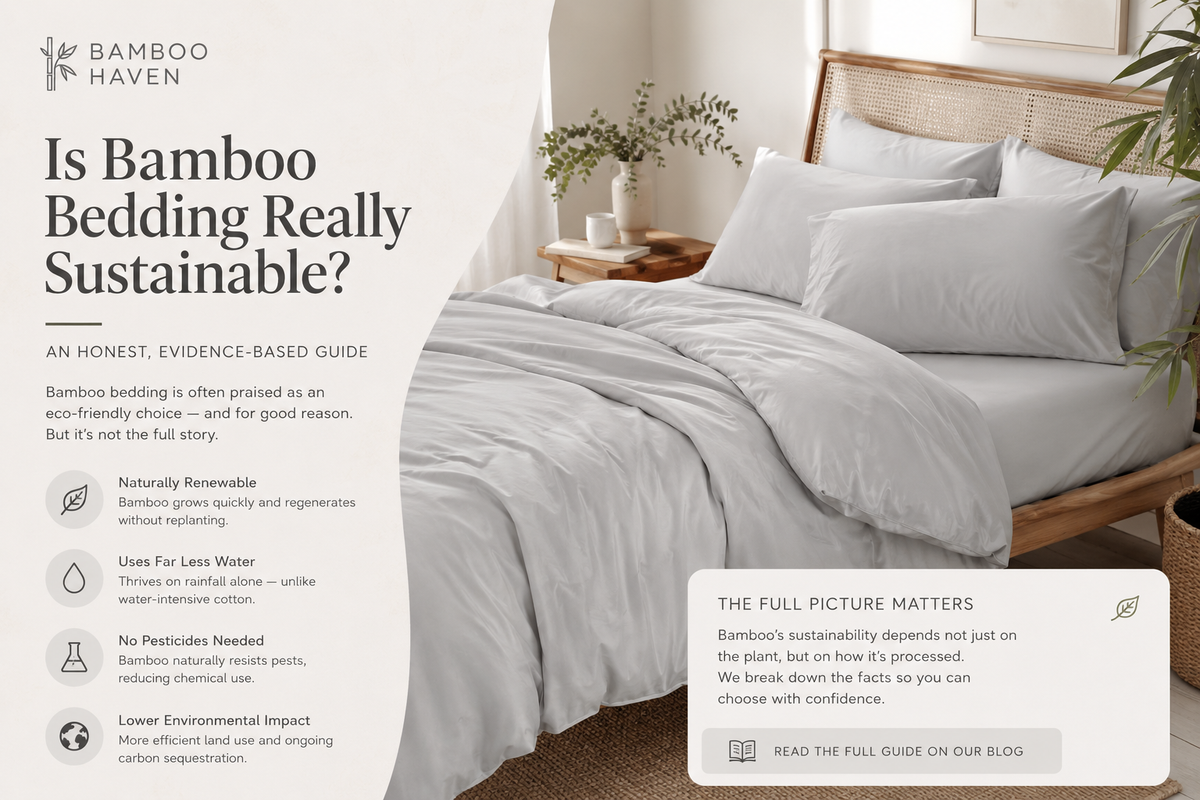
Your sheets, duvet cover, and pillowcases create the immediate sleep surface — everything you are in direct contact with for the entire night. This is where premium bedding makes its most tangible difference. Bamboo Haven's 100% bamboo viscose collection — including the fitted sheet, duvet cover, pillowcases, comforter, and pillow — creates a sleep surface that is silky soft, naturally cooling, hypoallergenic, and OEKO-TEX certified safe. Customer reviews describe the experience of getting into a fully made Bamboo Haven bed as one of immediate, palpable relaxation — a physical response to the combination of tactile softness, cool temperature, and genuine comfort.
Colour, Texture, and Visual Calm
Colour Palette for Sleep
The visual environment of your bedroom affects your nervous system before you even close your eyes. Research on environmental psychology consistently shows that muted, natural tones — soft blues, sage greens, warm whites, sandy neutrals, and muted pinks — are associated with reduced arousal and a sense of calm. Highly saturated or contrasting colours stimulate the visual cortex in ways that work against the nervous system's wind-down process.
Bamboo Haven's bedding collection is available in five carefully selected tones: soft beige, sage green, blush pink, ice blue, and navy. Each is designed to complement a calm, cohesive bedroom palette and to work beautifully with natural wood, linen, and other materials associated with serene interior spaces.
Texture and Material Choices
Natural textures — linen, wool, bamboo, wood, stone — create a sensory environment that most people find inherently more calming than synthetic materials. The smooth, silky texture of bamboo viscose bedding is particularly well-suited to the sleep environment: soft enough to feel luxurious, cool enough to feel refreshing, and natural enough to feel calm. Pairing bamboo bedding with natural wood furniture, linen cushions, and organic cotton or wool throws creates a coherent, calming visual and tactile environment.
Decluttering the Bedroom
Visual clutter is associated with elevated cortisol and reduced sleep quality in multiple studies. The bedroom is not a storage space. Keep surfaces minimal — a lamp, perhaps a book and a glass of water on the bedside table, and nothing that belongs in another room. Move work materials, screens, exercise equipment, and anything cognitively stimulating out of the bedroom entirely if possible. The discipline of keeping the bedroom calm and clear pays dividends in sleep quality.
Scent, Plants, and Finishing Details
Scent can meaningfully support relaxation. Lavender in particular — whether as a diffused oil, a spray on the pillow, or a plant near the bedroom — has the most consistent evidence base for sleep support among aromatherapy options. Keep scent subtle; overwhelming fragrances can be stimulating rather than relaxing. A few drops of lavender essential oil on a tissue inside your pillowcase is sufficient to achieve a calming effect without overpowering the room.
Houseplants contribute to bedroom wellbeing by improving air quality slightly, providing visual softness, and connecting the space to nature — an association that most people find inherently calming. Bedroom-appropriate plants that prefer low light and require minimal maintenance include snake plants, peace lilies, and pothos. Avoid plants with strong fragrances that might become overpowering in a small, closed room.
Technology: Remove It Where You Can
The single most impactful technology decision for sleep quality is keeping smartphones and tablets out of the bedroom — or at minimum, charging them away from the bedside. The temptation to scroll before sleep, the disruptive potential of notifications, and the blue light emission all work against sleep quality in ways that are well-established in sleep research. Replace the habit of pre-sleep scrolling with reading, gentle stretching, journalling, or simply resting in the dark. Most people find that the transition away from bedside screens improves their sleep quality noticeably within a week or two of consistent practice.
Seasonal Adjustments to Your Sleep Sanctuary
A genuinely well-optimised sleep sanctuary is not a fixed, one-time setup — it benefits from small seasonal adjustments as the UK's weather shifts throughout the year. In summer, prioritise heat-blocking measures during the day, such as keeping blackout blinds closed against direct sun, and consider switching to a lighter tog duvet paired with breathable bamboo viscose bedding to prevent overheating during warmer nights. In winter, the same breathable bamboo bedding continues to perform well, but pairing it with a higher tog duvet and ensuring the room is not allowed to become too cold overnight — since a bedroom that is too cold can be just as disruptive to sleep as one that is too warm — helps maintain the same consistent comfort year-round.
Daylight hours also shift dramatically across the UK calendar, meaning blackout curtain effectiveness matters even more during summer months when early sunrises can disrupt sleep well before a normal wake time. Reviewing your bedroom setup at the start of each season — checking blackout coverage, adjusting duvet tog rating, and confirming ventilation is adequate for the season — ensures your sleep sanctuary continues delivering consistent results throughout the year rather than being optimised for only one set of seasonal conditions.
Start building your sleep sanctuary with Bamboo Haven bedding at https://bamboohaven.co.uk