How to Wash and Care for Bamboo Bedding: A Complete Guide
One of the most genuinely appealing qualities of bamboo viscose bedding is that it gets better with washing — it becomes progressively softer, more comfortable, and more beautiful over time when properly cared for. However, bamboo viscose is more delicate than cotton and responds poorly to high heat, harsh chemicals, and mechanical stress. The difference between bedding that lasts for years and bedding that deteriorates quickly is almost entirely down to how it is washed and dried. This guide gives you everything you need to care for your bamboo bedding correctly.
Why Bamboo Viscose Requires Gentle Care
Bamboo viscose fibres are exceptionally fine — significantly finer than cotton fibres. This fineness is what makes the fabric so silky and soft, but it also means the fibres are more susceptible to damage from high temperatures, aggressive agitation, and harsh chemical treatment. Unlike cotton, which is relatively robust to a wide range of washing conditions, bamboo viscose rewards gentle treatment and punishes neglect.
The good news is that gentle care is simple care. Bamboo viscose does not require any special products, extended soaking, or time-consuming treatment. It simply requires the right temperature, the right cycle, and the right detergent — all of which are easy to establish as a habit. Once the right routine is established, caring for bamboo bedding is no more effort than any other laundry — just with different settings.
Washing Bamboo Bedding: Complete Instructions
Temperature: Always 30-40 Degrees
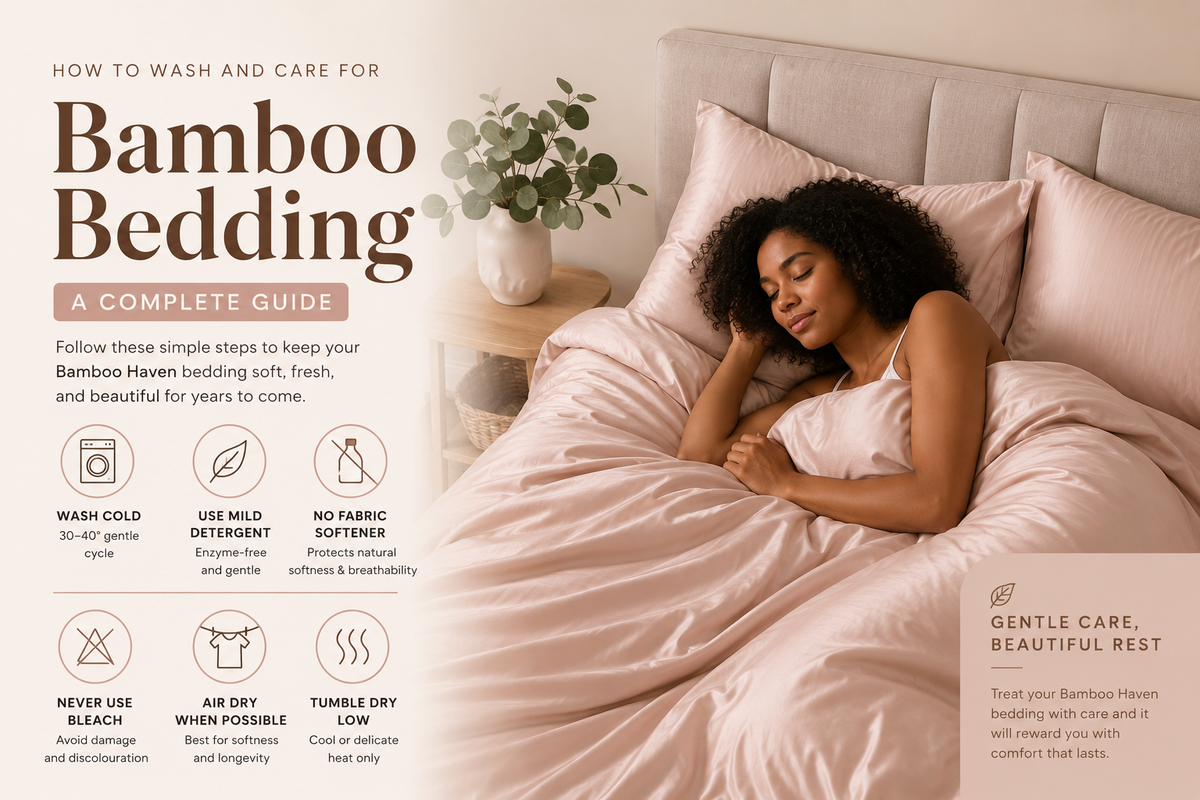
This is the single most important rule for washing bamboo bedding. Always use a 30 or 40 degree wash. Higher temperatures — particularly 60 degrees or above, which are commonly used for cotton bedding — weaken bamboo viscose fibres over time, can cause the fabric to shrink, and degrade the silky texture that makes bamboo bedding so comfortable. A 30 degree gentle wash is sufficient to clean bamboo bedding thoroughly while fully preserving the fabric. If you are washing after illness and feel a higher temperature is necessary, 40 degrees is the maximum safe option.
Cycle: Gentle or Delicate
Always select the gentle or delicate cycle on your washing machine when washing bamboo bedding. These cycles use slower spin speeds and reduced agitation, both of which reduce mechanical stress on the bamboo fibres. Avoid the standard or heavy-duty cycles, which apply significant mechanical force that can stretch or damage fine bamboo viscose fabric over time. Even a single wash on a heavy cycle can measurably affect the texture and longevity of bamboo bedding.
Detergent: Mild and Enzyme-Free
Use a mild, gentle detergent for bamboo bedding. Biological detergents contain enzymes specifically designed to break down proteins and other organic material — and over time, these same enzymes can degrade natural fibres including bamboo viscose. A non-biological, fragrance-free, mild detergent is the best choice for both fabric longevity and hypoallergenic performance. This also preserves the skin-friendly properties of the fabric, as fragrance chemicals are among the most common contact allergens.
Fabric Softener: Do Not Use
This is one of the most common mistakes people make with bamboo bedding. Fabric softeners work by coating fibres with a thin layer of lubricating chemicals to make fabric feel softer. The problem is that this coating reduces the bamboo fabric's natural breathability and moisture-wicking ability — two of its most important properties. It also builds up over multiple washes, making the fabric feel heavier and less fresh over time. Bamboo viscose becomes naturally softer with washing. Fabric softener is not just unnecessary — it actively works against the fabric's best qualities.
Bleach and Whitening Agents: Never Use
Bleach and optical whitening agents damage bamboo viscose fibres and can cause yellowing, weakening, and colour changes over time. For stain removal on bamboo bedding, apply a small amount of mild liquid detergent directly to the stain and leave for a few minutes before washing normally. For stubborn stains, a gentle pre-soak in cool water with a small amount of detergent is more effective and less damaging than any bleach-based product.
Washing Multiple Items Together
Wash bamboo bedding separately from items with rough surfaces, velcro, zips, or hooks that could snag the fine fabric. Do not overload the washing machine — bamboo items need adequate room to move freely for thorough washing and rinsing. Overloading also increases the mechanical stress on fabric during the spin cycle, which is one of the most common causes of premature wear in fine natural fabrics.
Drying Bamboo Bedding
Air Drying: Always the Best Option
Air drying is the gentlest and most effective method for preserving bamboo bedding. Hang sheets and duvet covers on a clothesline or drying rack with adequate space for air to circulate. Avoid direct, intense sunlight for extended periods as this can cause some fading over time — a shaded outdoor spot or an indoor drying rack is ideal. Air-dried bamboo bedding retains its softness well and has a naturally fresh quality that tumble drying cannot fully replicate.
Tumble Drying: Low Heat Only
If you need to tumble dry bamboo bedding, use the lowest available heat setting — cool or delicate. Remove the bedding while it is still slightly damp and allow it to finish air drying on a rack. High heat is the most common cause of premature ageing in bamboo viscose bedding, weakening fibres and causing the fabric to lose its silky texture. Never use a high-heat tumble dry setting on bamboo bedding under any circumstances.
Ironing Bamboo Bedding
One of the underappreciated advantages of bamboo viscose bedding is that it rarely needs ironing. The fabric naturally relaxes and releases creases as it warms to body temperature, so most visible creases disappear within minutes of getting into bed. If you prefer a very smooth, crisp finish, iron on a cool to low heat setting while the fabric is still slightly damp. Never use a hot iron setting or iron bone-dry bamboo fabric.
How Often Should You Wash Bamboo Bedding?
- Pillowcases: Every 2-3 days for most sleepers; at least twice weekly if you use skincare products, sweat significantly, or have sensitive skin
- Fitted sheets and flat sheets: Once a week is standard; more frequently during hot weather or illness
- Duvet covers: Every 1-2 weeks
- Bamboo comforters and duvets: Every 2-3 months under normal use, or when visibly soiled
Storing Bamboo Bedding
Store clean, completely dry bamboo bedding in a cool, well-ventilated location away from prolonged exposure to direct light. Avoid plastic bags or airtight containers, which can trap any residual moisture and create conditions for mildew. Cotton or linen storage bags that allow the fabric to breathe are ideal. Fold along the same lines consistently to prevent permanent crease marks developing in stored bedding over time.
Why Bamboo Haven Bedding Gets Better Over Time
Bamboo Haven's customers consistently report that their bedding improves with washing — becoming measurably softer and more comfortable after several months of regular use. This is a genuine, verifiable property of well-made 100% bamboo viscose: the fibres relax and refine with each gentle wash cycle in a way that cotton does not replicate. With the care described in this guide, your Bamboo Haven bedding will maintain this quality and continue to improve for years to come — making it one of the best long-term investments you can make in your sleep.
Common Washing Mistakes to Avoid
A small number of recurring mistakes account for the majority of premature wear reported in bamboo viscose bedding, and nearly all of them are easily avoided once identified. Washing on a hot cycle intended for towels or cotton bedding, rather than switching to the correct 30-40 degree gentle cycle, is the single most common error, often made by households washing bamboo bedding alongside other laundry without adjusting the settings specifically. Using biological detergent out of habit, simply because it is what is already in the cupboard, is another frequent mistake that gradually degrades the fibres through repeated enzyme exposure.
Leaving bamboo bedding balled up in the washing machine or tumble dryer after the cycle finishes, rather than promptly removing and either hanging or laying it flat, is a further common cause of stubborn creasing and can encourage a musty smell to develop if the fabric sits damp for an extended period. Finally, washing bamboo bedding at full load capacity alongside a large general laundry wash, rather than giving it adequate space to move freely in the drum, increases mechanical stress and reduces how thoroughly the fabric is rinsed — both of which shorten the fabric's practical lifespan over time.
Caring for Bamboo Pillows and Comforters Specifically
Pillows and comforters require somewhat different care from sheets and pillowcases, given their bulkier construction and fill material. Most bamboo viscose pillows and comforters can be machine washed on a gentle 30-40 degree cycle, but should be washed using a machine with adequate drum capacity to allow the item to move freely and rinse thoroughly — an overloaded machine will not clean a bulky pillow or comforter effectively and places additional strain on the machine itself. Always check the specific care label on your pillow or comforter, since fill type can occasionally affect the recommended washing approach.
Drying is where pillows and comforters demand the most patience. Because these items are considerably thicker than sheets, they take significantly longer to dry fully, and any residual damp fill left inside can lead to mildew or an unpleasant odour developing inside the item where it cannot be easily seen or addressed. Tumble drying on the lowest heat setting, combined with a few clean tennis balls or dryer balls to help redistribute the fill and prevent it clumping, tends to give the most reliable result. Whichever drying method you use, it is worth periodically checking that the centre of a pillow or comforter is genuinely dry, not just the outer surface, before returning it to use or storage.
Shop Bamboo Haven's long-lasting bamboo viscose bedding at https://bamboohaven.co.uk