Bamboo Bedding vs Linen: Which Suits Hot Sleepers Best?
Linen and bamboo viscose have both earned strong reputations among hot sleepers searching for bedding that genuinely helps manage overnight temperature, and both regularly appear on recommended lists for anyone who struggles with overheating in bed. But the two fabrics achieve breathability through quite different mechanisms, and understanding these differences helps identify which is the better fit for your specific sleep needs.
How Linen Achieves Its Breathability
Linen is woven from flax fibres, which are naturally hollow and have an open, slightly looser weave structure compared with many other fabrics. This open weave allows air to circulate relatively freely through the fabric, which is the primary mechanism behind linen’s reputation for breathability. Linen also has a naturally textured, slightly nubbly surface, which some people find pleasantly rustic and others find less smooth and luxurious than a finer fabric.
Linen absorbs moisture reasonably well and releases it relatively quickly into the surrounding air, which supports its cooling reputation, though this moisture handling works somewhat differently to the wicking mechanism bamboo viscose relies on, discussed below.
How Bamboo Viscose Achieves Its Breathability
Bamboo viscose achieves breathability through a different route: the fibre itself has a naturally porous micro-structure, with tiny gaps within the fibre that support airflow and moisture movement at a level the weave structure alone cannot achieve. This means bamboo viscose can be woven into a much finer, denser and smoother fabric than linen while still maintaining strong breathability, since the breathability comes substantially from the fibre’s inherent structure rather than depending primarily on an open weave.
This is a meaningful practical difference: bamboo viscose delivers a genuinely smooth, silky surface feel — closer to the sensation of a very high thread count cotton — while still offering the airflow and moisture management hot sleepers are looking for, without needing the more open, textured weave that gives linen its characteristic feel.
Also Read: The Best Bedding for Sensitive Skin and Eczema: Why Bamboo Wins
Comparing Moisture Management
Both fabrics handle moisture better than many synthetic alternatives, but through different mechanisms worth understanding if overnight sweating is a significant factor in your discomfort. Bamboo viscose is well regarded for genuine moisture-wicking performance, actively drawing moisture away from the skin surface into the fabric where it can evaporate more readily, helping the skin itself feel drier through the night. Linen absorbs moisture effectively — flax fibres can hold a meaningful amount of moisture without feeling immediately wet to the touch — and then releases it gradually, which some hot sleepers find genuinely comfortable, while others find linen can feel slightly damp during particularly heavy sweating before that moisture has had time to evaporate.
For hot sleepers who sweat heavily overnight, bamboo viscose’s more active wicking action is often reported as the more immediately comfortable option, while linen’s gradual absorb-and-release approach tends to suit more moderate warmth and humidity management needs.
Softness and Feel Against the Skin
This is one of the more clearly differentiated areas between the two fabrics. Bamboo viscose is prized specifically for its exceptional smoothness — genuinely comparable to very high thread count cotton — making it a natural choice for anyone who prioritises a silky, luxurious feel against the skin. Linen, by contrast, has a distinctively textured, slightly crisp handle, particularly when new, that softens somewhat with repeated washing but never achieves the same silky smoothness as bamboo viscose. Some people specifically prefer linen’s more textured, natural character, associating it with a relaxed, effortlessly stylish aesthetic, while others find bamboo viscose’s smoother finish more genuinely comfortable for direct overnight skin contact.
Weight and Drape
Linen typically has a heavier, more substantial drape than bamboo viscose, with a characteristic slightly crumpled, relaxed look that many people find aesthetically appealing, particularly in more casual or coastal-style bedroom decor. Bamboo viscose drapes more fluidly and tends to look smoother and less deliberately textured on the bed, suiting a more refined, hotel-luxury aesthetic. Neither drape quality is objectively superior — the choice here comes down substantially to personal aesthetic preference for your bedroom rather than a functional performance difference.
Care and Maintenance Comparison
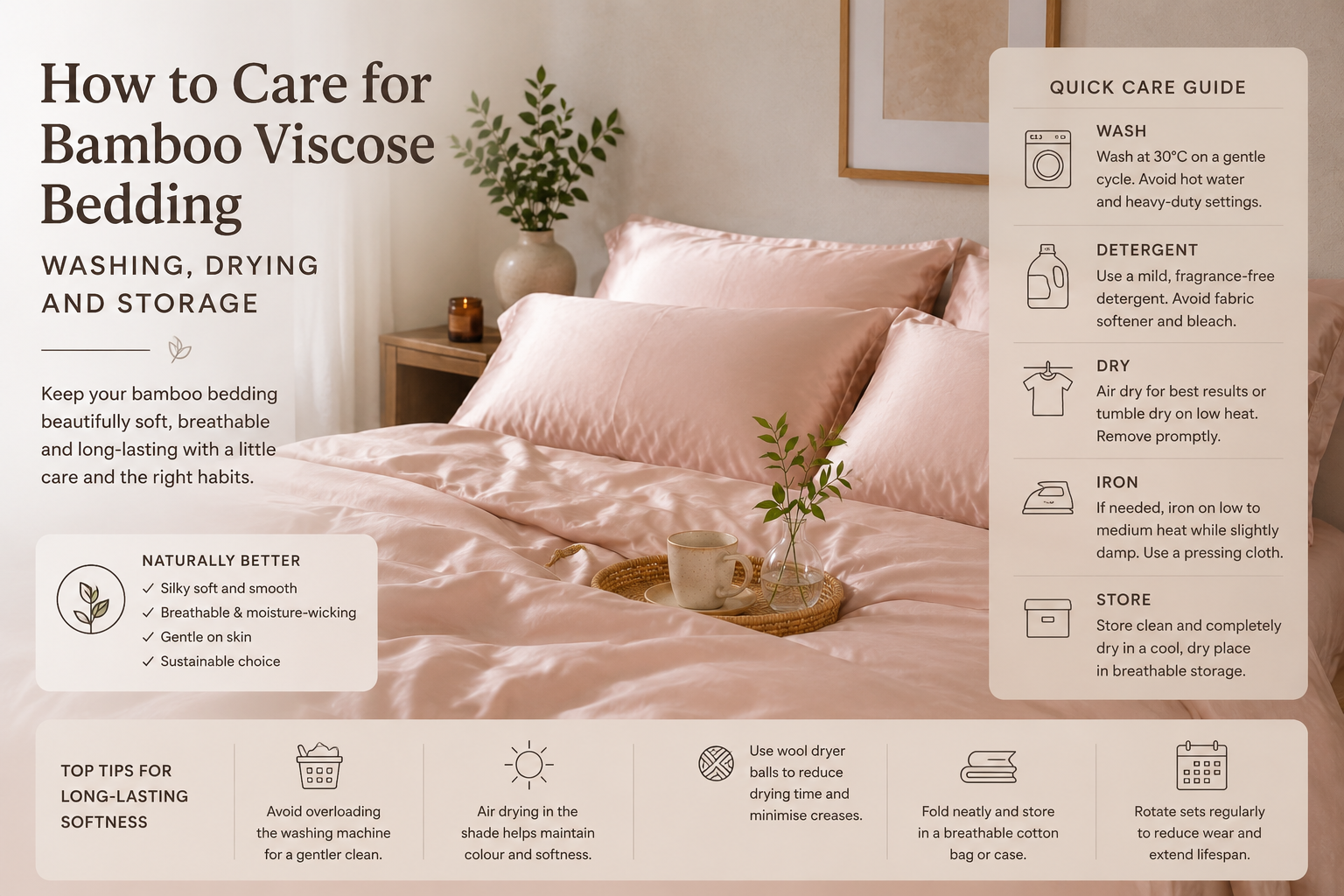
Linen is famously low-maintenance in one specific respect: its characteristic creased, relaxed look means it genuinely does not need ironing to look appropriately styled, which appeals to anyone who prefers minimal bedding upkeep. However, linen can be prone to more visible wrinkling generally and, without proper care, can develop a rougher handle over time. Bamboo viscose requires the gentler washing and lower-heat drying approach detailed in our dedicated bamboo viscose care guide, and benefits from being smoothed out after washing to minimise creasing, but rewards this modest extra care with a consistently smooth, unwrinkled appearance that some people prefer over linen’s more deliberately textured look.
Price and Value Considerations
Genuine, high-quality linen bedding is often priced at a premium compared with bamboo viscose, reflecting the more resource- and labour-intensive flax growing and linen weaving process. Bamboo viscose, while still a premium natural fibre product compared with standard cotton or synthetic bedding, is generally more accessibly priced than comparable-quality linen, offering many of the breathability and natural-fibre benefits hot sleepers are looking for at a more moderate price point.
Which Should You Choose?
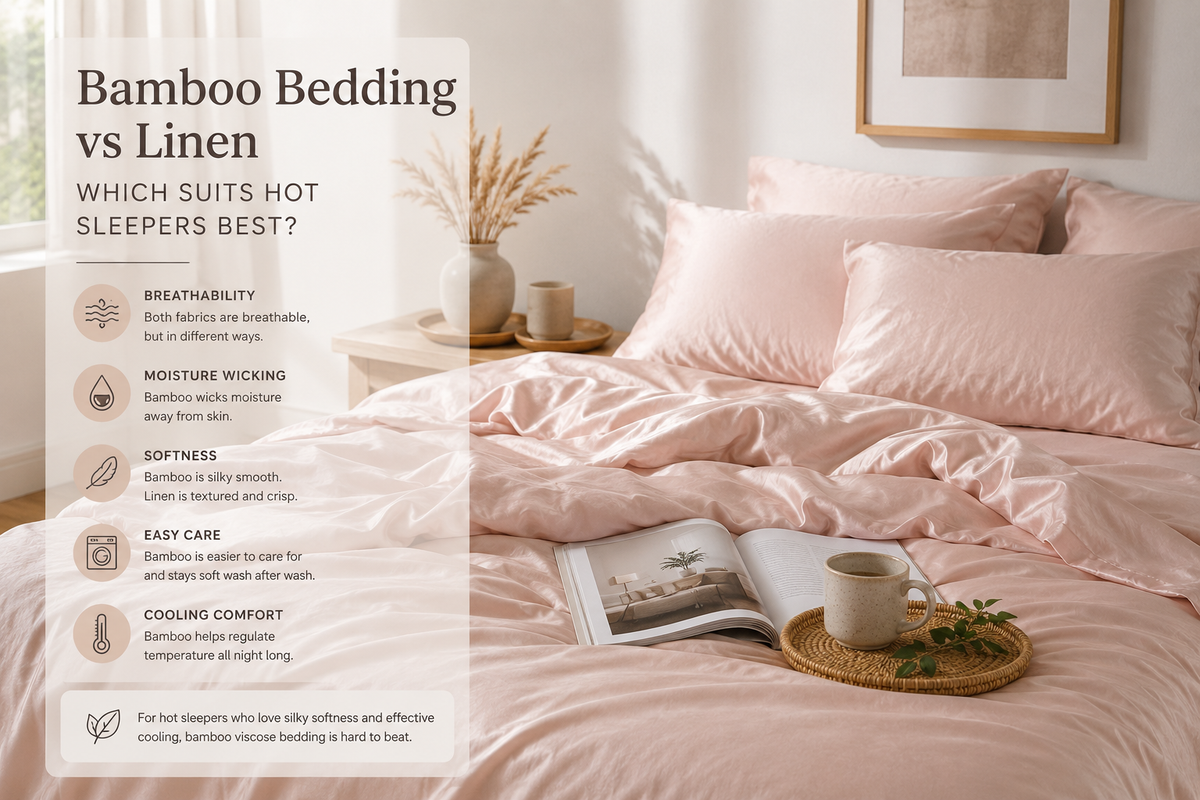
For hot sleepers who prioritise a silky, smooth feel alongside strong breathability and active moisture-wicking, bamboo viscose is generally the better match. For those who love linen’s distinctive relaxed texture and low-maintenance, no-iron aesthetic, and who find linen’s absorb-and-release moisture handling comfortable for their own sweat levels, linen remains an excellent choice. Some households ultimately choose to own both, using each fabric in different rooms or seasons depending on which specific qualities matter most at the time.
Considering Your Specific Bedroom Style
Beyond function, the two fabrics tend to suit somewhat different overall bedroom aesthetics, which is worth factoring into a decision alongside the purely functional comparisons above. Linen’s characteristic relaxed, slightly crumpled texture pairs particularly well with a coastal, farmhouse, or deliberately laid-back interior style, where its natural imperfection is part of the visual appeal rather than something to be minimised. Bamboo viscose’s smoother, more fluid drape suits a more refined, hotel-luxury or contemporary minimalist aesthetic, where a crisp, unwrinkled, elegant appearance is more central to the overall look being created. Neither aesthetic direction is inherently superior, and considering which better complements your existing bedroom decor and personal style is a genuinely valid part of the decision-making process, alongside the functional breathability and comfort considerations discussed throughout this guide.
A Side-by-Side Summary
For anyone wanting a quick practical reference, the core distinctions come down to this: bamboo viscose offers a smoother, silkier feel, more active moisture-wicking particularly suited to heavy overnight sweating, easier machine-washable care, and a more accessible price point. Linen offers a distinctively textured, relaxed handle, genuinely effective passive breathability through its open weave, a no-iron practical appeal, and a naturally rustic aesthetic many people specifically seek out. Both represent a genuine step up from synthetic bedding for anyone managing overheating at night, and the right choice ultimately comes down to which specific combination of these characteristics best matches your own priorities and bedroom style.
A Note on Blended Fabrics
It is worth mentioning that some products on the market blend bamboo and linen fibres together, aiming to capture qualities of both fabrics within a single blended product. These blends can offer an interesting middle-ground option, though as with any blended fabric, the specific ratio of each fibre significantly affects the finished product’s characteristics, and a blend heavily weighted toward one fibre will behave considerably more like that dominant fibre than like a genuine 50/50 combination of both fabrics’ distinct qualities.
Seasonal Suitability Compared
One further practical distinction worth noting is how each fabric performs across the full UK seasonal range rather than solely during warm weather. Linen’s open weave, so effective for summer breathability, offers comparatively less insulation during cooler months, meaning linen bedding often benefits from being paired with a higher tog duvet in winter to compensate. Bamboo viscose, while equally breathable in warm weather, tends to feel slightly more adaptable across a broader temperature range on its own, making it a marginally more versatile year-round choice for households not wanting to significantly adjust their bedding fabric between seasons.
Frequently Asked Questions
Q1: Is linen cooler than bamboo viscose, or is bamboo viscose cooler than linen?
Ans: Both are genuinely breathable natural fibres well suited to hot sleepers, achieving this through different mechanisms; many people find bamboo viscose’s active moisture-wicking particularly effective for heavy overnight sweating, while linen’s open weave suits general airflow and warm-weather use.
Q2: Does linen soften over time the way bamboo viscose stays consistently soft?
Ans: Yes, linen does soften with repeated washing and use, though it generally retains more of its characteristic textured handle than bamboo viscose, which offers a consistently smooth, silky feel from the first wash onward.
Q3: Can bamboo viscose and linen be mixed within the same bedding setup?
Ans: Yes, many people combine the two — for example, a bamboo viscose duvet cover and pillowcases for smooth, skin-friendly comfort alongside linen curtains or throws for texture and aesthetic contrast within the same bedroom.
Both bamboo viscose and linen offer genuine, natural-fibre breathability that outperforms most synthetic bedding for hot sleepers, and the right choice ultimately comes down to whether you prioritise silky smoothness and active moisture-wicking, or textured character and minimal-maintenance styling, for your own bedroom.