How to Care for Bamboo Viscose Bedding: Washing, Drying and Storage
Bamboo viscose bedding is a genuine investment in better sleep, and like any quality natural fibre product, it rewards a small amount of correct care with years of continued softness and performance. Equally, incorrect washing, drying or storage can noticeably shorten a bamboo viscose product’s lifespan and dull the exceptional softness that made it worth choosing in the first place. This guide sets out exactly how to care for bamboo viscose bedding to keep it performing beautifully wash after wash.
Washing Temperature and Cycle Selection
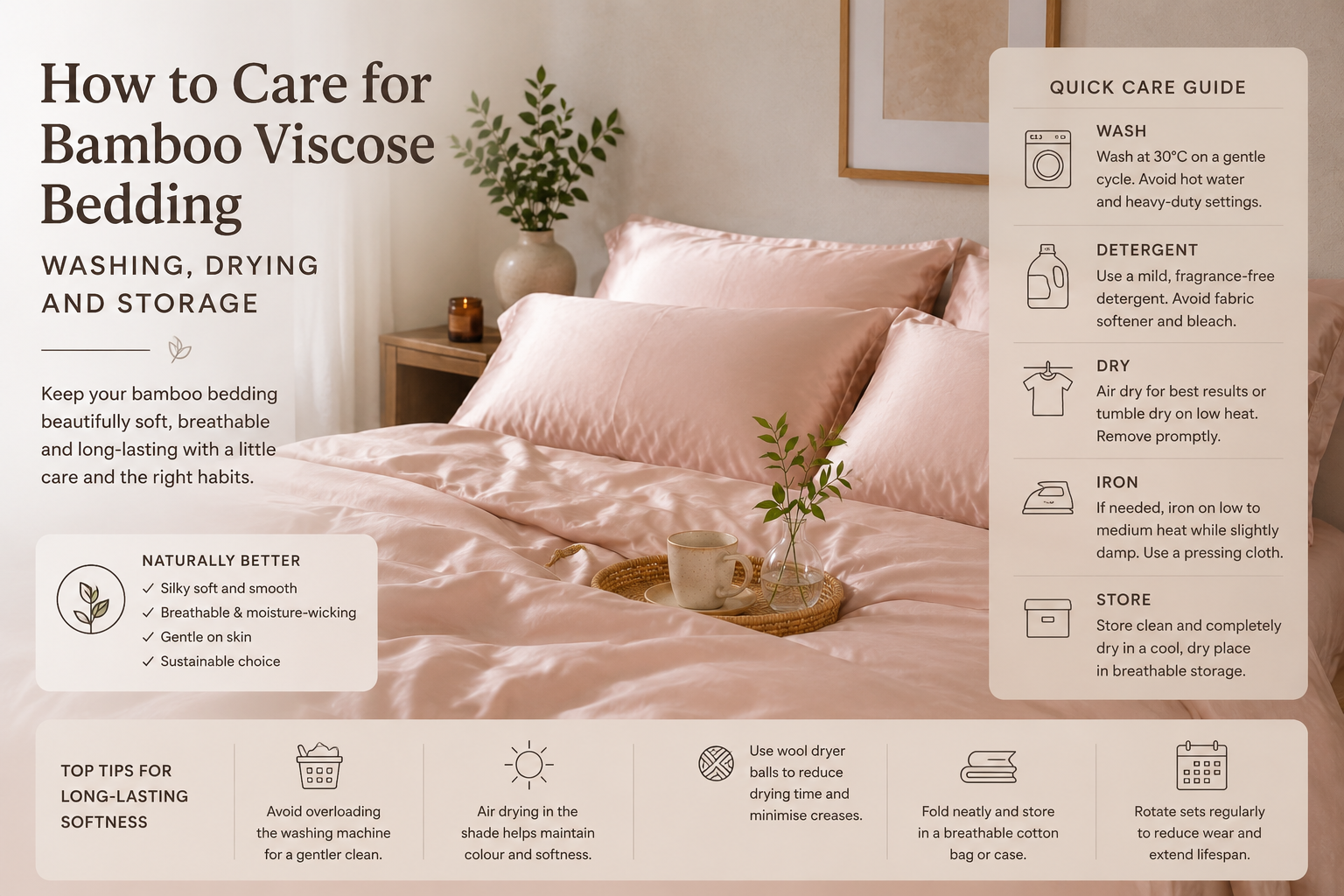
Bamboo viscose should generally be washed at a cool to moderate temperature, typically 30°C, using a gentle or delicate cycle rather than a standard or heavy-duty setting. Viscose fibres, while durable when cared for correctly, are more sensitive to heat and mechanical agitation than sturdier fabrics like standard cotton, and washing at higher temperatures or on more vigorous cycles can accelerate fibre breakdown over time, leading to a rougher handle and reduced longevity considerably sooner than proper care would allow.
A gentle cycle also reduces the mechanical friction the fabric experiences during washing, which matters particularly for preserving the smooth, silky surface that is one of bamboo viscose’s most valued characteristics. Overloading the washing machine drum compounds this issue, since overcrowded items receive less effective cleaning and experience more friction against each other during the wash cycle; washing bamboo viscose bedding with adequate space in the drum, rather than combined with a full household laundry load, produces noticeably better results over time.
Also Read: What Is Bamboo Viscose? Everything You Need to Know About This Luxury Fabric
Choosing the Right Detergent
A mild, gentle detergent free from harsh optical brighteners and heavy fragrance is the best choice for bamboo viscose bedding, both for preserving the fabric’s natural softness and for anyone using the bedding specifically for its skin-friendly properties. Fabric softener should generally be avoided, which surprises many people who assume softener is beneficial for soft fabrics; in reality, fabric softener works by coating fibres with a waxy residue, and on a naturally soft fabric like bamboo viscose, this residue can actually reduce breathability and moisture-wicking performance over time, working against the very qualities that make the fabric valuable in the first place.
For anyone with sensitive skin, a fragrance-free, dermatologically tested detergent is a sensible choice regardless of bedding fabric, and pairs particularly well with genuinely skin-friendly bamboo viscose bedding to maximise overall skin comfort.
Drying Bamboo Viscose Correctly
Air drying is the gentlest and generally preferred method for bamboo viscose bedding, helping preserve both fibre integrity and colour vibrancy over repeated wash cycles. Where tumble drying is more practical, a low heat setting is essential, since high heat is one of the most damaging factors for viscose fibres, causing them to become brittle and lose softness considerably faster than correctly low-heat-dried or air-dried items. Removing bedding from the tumble dryer promptly once dry, rather than leaving it to sit in a stopped dryer drum, also helps prevent excessive creasing that can be more stubborn to remove from viscose than from sturdier cotton fabrics.
Adding wool dryer balls to a low-heat tumble dry cycle can help reduce drying time and minimise creasing without introducing the residue concerns associated with dryer sheets, offering a practical middle ground for households that prefer or need to use a tumble dryer rather than air drying.
Ironing and Removing Creases
Bamboo viscose can be ironed if needed, but should be ironed on a low to moderate heat setting, ideally while still very slightly damp, since fully dried viscose can be more prone to heat marking than fabric ironed at the correct damp stage. Using a pressing cloth between the iron and the fabric adds a further layer of protection against direct heat damage, particularly useful for anyone new to ironing viscose fabrics who wants extra reassurance while adjusting to the correct technique.
In practice, many people find that promptly removing bamboo viscose bedding from the wash and either air drying it fully spread out, or tumble drying briefly on low heat and then immediately smoothing it out while making the bed, reduces creasing enough that ironing becomes unnecessary for most everyday use.
Storing Bamboo Viscose Bedding Between Uses
When storing bamboo viscose bedding that is not in current use — a spare set, or seasonal bedding being rotated out — ensure it is completely clean and fully dry before storage, since any residual moisture can lead to mildew or musty odours developing during storage, particularly in less ventilated storage spaces such as airing cupboards or under-bed boxes. Cotton storage bags or breathable fabric containers are preferable to sealed plastic bags, since natural fibres benefit from some ongoing air circulation even in storage, whereas sealed plastic can trap any residual humidity against the fabric.
Folding rather than tightly rolling bedding for storage generally helps avoid the kind of permanent creasing that can develop when fabric is compressed in one position for extended periods, and periodically refolding stored bedding along different lines during long storage periods further reduces this risk.
Spot Cleaning and Stain Treatment
For minor spills or marks between full washes, spot cleaning with a small amount of mild detergent and cool water, applied gently with a soft cloth rather than vigorous rubbing, is generally the safest approach for bamboo viscose. Vigorous rubbing can disturb the fibre structure at the treated spot, sometimes creating a visible texture difference even after the stain itself has been removed, so a gentle blotting and dabbing motion is preferable throughout any spot treatment.
For more stubborn stains, treating promptly rather than allowing a stain to set is particularly important with viscose fibres, and a full gentle wash at the correct 30°C temperature, rather than attempting to treat a set-in stain with harsher spot treatments or higher temperatures, generally produces the best outcome without risking damage to the surrounding fabric.
How Often to Wash Different Bedding Pieces
Different pieces of a bedding set reasonably follow different washing frequencies based on how much direct skin and body contact they receive. Pillowcases, given their direct and sustained facial contact, benefit from washing every few days to once weekly. Fitted sheets and duvet covers are generally recommended for washing weekly to fortnightly under normal use, while duvets and pillows themselves, which are protected by covers and cases, typically need washing far less frequently — often only two to four times a year — provided their covers are washed regularly and the duvet or pillow itself has not been directly soiled.
Travel and Hotel-Style Considerations
If you regularly travel and have grown fond of the crisp, fresh feel of well-maintained hotel-style bedding, applying the same care principles at home — prompt washing, correct temperature, and proper drying and smoothing — is largely how hotels achieve that consistently fresh result, rather than any special product or technique unavailable to home laundering. The main practical difference is simply frequency and immediacy: hotels typically launder and remake beds between every single guest, whereas most households naturally follow a longer, more realistic domestic washing cycle, as discussed in our dedicated washing frequency guide.
For anyone wanting to recreate that hotel-fresh feeling more consistently at home, promptly remaking the bed as soon as bedding comes out of the wash, rather than allowing it to sit folded for an extended period before use, helps preserve that just-laundered crispness and freshness for longer once the bed is made up again.
Troubleshooting Common Bamboo Viscose Care Issues
A small number of care issues account for most of the problems people occasionally report with bamboo viscose bedding, and nearly all trace back to one of the core care principles discussed above. Fabric that has become rough or less soft over time is most commonly linked to washing at too high a temperature, tumble drying on excessive heat, or the use of fabric softener, all discussed earlier in this guide. Excessive pilling, where small fibre balls form on the fabric surface, can result from washing alongside rougher fabrics or zips that create friction during the wash cycle, reinforcing the earlier recommendation to wash bamboo viscose separately or with similarly gentle items. Persistent creasing that does not soften with normal use usually indicates the fabric was left balled up in the washing machine or tumble dryer for an extended period after the cycle finished, rather than being promptly removed and shaken out or hung to help fibres settle naturally.
Recognising which specific care step may have been missed, rather than assuming a quality issue with the fabric itself, generally resolves the large majority of these common concerns going forward.
Frequently Asked Questions
Q1: Can bamboo viscose bedding be washed with other fabrics in the same load?
Ans: It is generally best practice to wash bamboo viscose separately or with similarly delicate items, since washing alongside rougher fabrics such as heavy denim or items with zips and fastenings can introduce unnecessary friction and snagging risk during the wash cycle.
Q2: Does bamboo viscose shrink if washed incorrectly?
Ans: Washing at excessively high temperatures or tumble drying on high heat can cause some shrinkage in viscose fabrics; following the recommended 30°C wash and low-heat drying guidance throughout this guide significantly reduces this risk and helps bedding maintain its original fit over time.
Q3: How long should properly cared-for bamboo viscose bedding last?
Ans: With correct washing, drying and storage practice as outlined in this guide, bamboo viscose bedding can maintain its softness and performance for several years of regular use, considerably outlasting the lifespan many people experience with incorrectly cared-for fabric of any type.
Taking a small amount of extra care with washing temperature, detergent choice, drying method and storage pays genuine dividends with bamboo viscose bedding, preserving the exceptional softness and performance that made it worth choosing in the first place for years of continued, comfortable use.