How to Choose the Right Duvet Tog Rating for Every UK Season
Few bedding terms cause as much genuine confusion as “tog,” and yet it is arguably the single most important number to understand when choosing a duvet, since it directly determines whether a night’s sleep will be too warm, too cold, or genuinely comfortable. Understanding what tog actually measures, and how to match it to the seasons, your home, and your own body, removes the guesswork from one of the most consequential bedding decisions you will make.
What Tog Actually Measures
Tog is a unit of thermal resistance, measuring how effectively a duvet traps warm air and resists heat loss, rather than measuring warmth directly. The higher the tog rating, the more insulating the duvet, and the more heat it retains close to your body overnight. This is why a 4.5 tog duvet feels appropriately light for a warm summer night, while a 13.5 tog duvet feels comfortably heavy and warm through a cold winter, despite both potentially being filled with a broadly similar material.
It is worth understanding that tog rating is entirely independent of the outer fabric of a duvet. A bamboo viscose shell, for instance, does not itself carry a tog rating — the number reflects the insulating fill inside, most commonly a microfibre fill in the case of Bamboo Haven’s duvet range. The bamboo viscose shell instead contributes to how breathable and next-to-skin comfortable the duvet feels, working alongside the fill’s tog rating rather than altering it.
Also Read: The Best Bedding for Menopause: Managing Night Sweats with Bamboo
Matching Tog to the UK Seasons
The UK’s relatively mild but changeable climate means most households benefit from owning at least two duvets of different tog ratings, or a combination duvet system that allows two duvets to be popped together for cooler months and used separately through warmer ones. As a general guide:
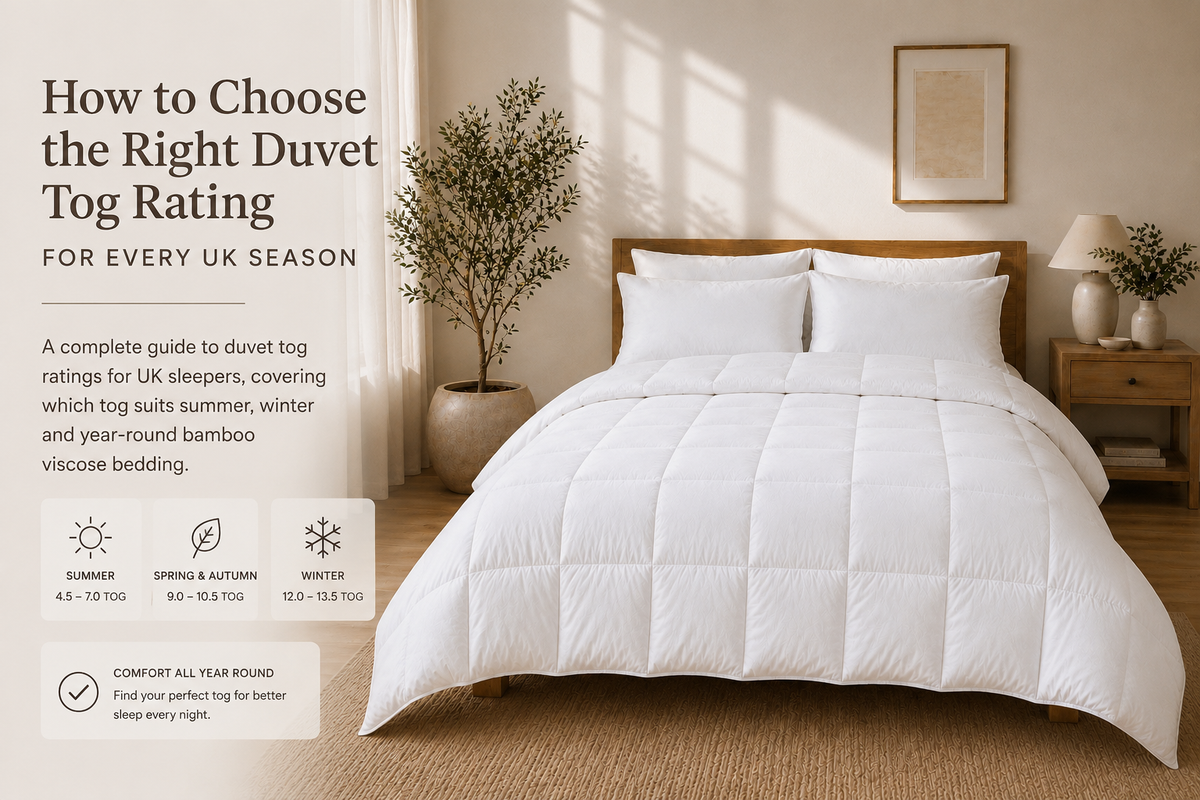
Spring and Autumn (9.0–10.5 tog): These transitional seasons in the UK rarely demand extreme warmth or extreme coolness, making a mid-range tog duvet the most versatile year-round choice for many households, particularly bedrooms that do not run especially hot or cold.
Summer (4.5–7.0 tog): Warmer months, and particularly UK heatwaves, call for a lighter tog duvet that avoids trapping excess heat overnight. Pairing a lower-tog duvet with a breathable bamboo viscose shell is a particularly effective combination for hot sleepers, since the fill provides modest insulation while the shell itself supports airflow and moisture movement away from the skin.
Winter (12.0–13.5 tog): Colder months, particularly in homes with less consistent central heating overnight, benefit from a higher tog duvet that retains more warmth. Some sleepers in particularly cold bedrooms or older, less insulated homes may prefer to layer a 4.5 tog and a 9.0 tog duvet together using popper-button duvet systems, effectively creating a custom-warmth 13.5 tog combination for the depths of winter, while retaining the flexibility to separate them again as the seasons turn.
Personal Factors Beyond the Calendar
Tog selection should not be based on season alone, since individual factors meaningfully affect how warm or cool any given tog rating will feel in practice. Hot sleepers, and those going through hormonal changes that affect body temperature regulation, often find a lower tog than the seasonal guide suggests works better for them year-round, even in winter, particularly when combined with breathable bedding layers that support airflow rather than trapping heat. Conversely, those who naturally run cold, or who sleep in bedrooms with older single-glazed windows or minimal heating, may find a higher tog more comfortable even in milder months.
Bedroom temperature itself is one of the most overlooked factors in tog selection. A duvet chosen for a bedroom that is reliably heated to a consistent temperature overnight will not necessarily suit a bedroom that cools significantly once heating switches off, which is common in many UK homes overnight. If you find yourself frequently kicking off your duvet or, conversely, reaching for extra blankets, this is usually a sign that the tog rating and your bedroom’s actual overnight temperature are mismatched, rather than a sign that something is wrong with the duvet itself.
Why the Duvet Shell Fabric Still Matters
While tog rating governs warmth, the fabric of the duvet’s outer shell plays a distinct but equally important role in overall sleep comfort. A 100% bamboo viscose shell, as used throughout the Bamboo Haven duvet range, supports airflow and helps manage moisture at the fabric surface, which means that even a higher-tog duvet feels less stifling and clammy than the same tog rating would in a less breathable shell fabric such as standard polyester or heavier cotton blends. This is particularly relevant for anyone who has previously found winter-weight duvets uncomfortably hot or humid to sleep under, since the issue may lie more with the shell fabric’s breathability than with the tog rating itself.
This is also why simply buying “the warmest duvet available” is rarely the right strategy for genuinely comfortable winter sleep. A very high tog duvet with a poorly breathable shell can trap moisture and feel oppressively warm in a way that a moderately high tog duvet with a genuinely breathable bamboo viscose shell does not, even though the second option may have a numerically lower tog rating.
A Practical Starting Point for Most Households
For anyone building a bedding wardrobe from scratch, a sensible and genuinely practical starting point is a 9.0 tog duvet for spring, autumn, and as a year-round option in consistently warm bedrooms, supplemented with a lighter 4.5–7.0 tog option for summer if you tend to sleep warm, or a heavier 12.0–13.5 tog option for winter if your bedroom runs cold. This two- or three-duvet approach costs more upfront than owning a single, permanently compromised mid-range duvet, but delivers meaningfully better sleep comfort across the genuine range of UK seasonal temperature that most bedrooms experience over the course of a year.
Layering Bedding Instead of Relying on Tog Alone
An often-overlooked alternative to owning multiple duvets at different tog ratings is building warmth through layering rather than through the duvet alone. A moderate mid-range tog duvet, combined with a lightweight blanket or throw for particularly cold nights, or removed for particularly warm ones, offers a more flexible and often more affordable route to year-round comfort than purchasing several full duvets. This approach also suits households sharing a bed where two people have genuinely different temperature preferences, since a shared moderate-tog duvet with an individual additional layer on one side offers a practical compromise without either person needing to sacrifice comfort for the other’s preference.
Bamboo viscose flat sheets and lightweight comforters work particularly well in this layering approach, since their breathability means they add a meaningful degree of warmth without contributing the heat-trapping, clammy feeling that heavier synthetic throws can introduce. For many households, a well-chosen mid-tog duvet paired with the flexibility to add or remove a breathable layer proves more genuinely practical over a full year than committing to several distinct full-tog duvets that each spend much of the year in storage.
Common Mistakes When Choosing a Tog Rating
A handful of recurring mistakes explain much of the dissatisfaction people report with duvet warmth. Buying based on price or availability rather than genuine seasonal and personal fit is one of the most common, often resulting in a single duvet purchased to serve the whole year that inevitably compromises comfort during at least half of it. Ignoring bedroom-specific conditions is another frequent issue — a tog rating that works well in a friend’s or family member’s home will not necessarily suit your own bedroom if it runs noticeably warmer or cooler overnight, whether due to insulation, heating patterns, or simply orientation and sun exposure during the day.
A further common mistake is assuming that discomfort under a given duvet is necessarily a tog problem, when in many cases it is actually a shell fabric breathability issue, as discussed above. Before assuming a duvet’s tog rating needs to change, it is worth considering whether switching to a more breathable bamboo viscose shell at the same tog rating resolves the issue, since this is often a simpler and more cost-effective fix than purchasing an entirely different tog rating.
Frequently Asked Questions
Q1: Can I use a lower tog duvet in winter if I sleep hot?
Ans: Yes, tog selection should ultimately follow your own body temperature and bedroom conditions rather than the calendar alone, and hot sleepers frequently find a lower tog than the standard winter recommendation more comfortable year-round.
Q2: Does a higher tog duvet always mean a heavier, bulkier duvet?
Ans: Generally, yes to a modest degree, since higher tog ratings typically require more fill material to achieve greater insulation, though the difference in weight between a mid-range and high-tog duvet is usually less dramatic than people expect, particularly with a well-distributed microfibre fill.
Q3: Is it worth buying a combination (popper-button) duvet system instead of separate duvets?
Ans: For households wanting maximum flexibility across the full range of UK seasonal temperatures without purchasing three or more separate duvets, a combination system offers a genuinely practical middle ground, allowing two duvets to be joined for winter and used separately through the rest of the year.
Choosing the right tog rating is ultimately about matching a specific number to your own bedroom, your own body, and the genuine seasonal range you experience, rather than assuming a single duvet can comfortably serve every month of the UK year. Taking the time to get this right pays off in noticeably better, more consistent sleep regardless of what the weather is doing outside.