Bamboo Bedding vs Silk: Comparing Two Luxury Sleep Fabrics
Silk has carried a reputation as the ultimate luxury bedding fabric for centuries, while bamboo viscose has emerged more recently as a genuine modern rival, offering many of silk’s most prized qualities alongside some meaningful practical advantages. For anyone deciding between the two for a genuinely luxurious sleep upgrade, understanding where they overlap and where they differ makes for a considerably more informed decision.
The Case for Silk
Silk is a natural protein fibre produced by silkworms, prized for millennia for its exceptionally smooth, lightweight feel and subtle natural sheen. Genuine mulberry silk, the most common variety used in quality bedding, has a naturally smooth fibre surface that creates minimal friction against skin and hair, which is part of why silk pillowcases in particular are so frequently recommended for reducing hair frizz and minimising the fine sleep creases some people notice on facial skin after a night on rougher fabric.
Silk also has genuine temperature-regulating properties, feeling cool to the touch and helping moderate body temperature across seasons, alongside a naturally hypoallergenic quality that makes it a popular choice for people with certain sensitivities.
The Case for Bamboo Viscose
Bamboo viscose offers a comparably smooth, silky handle to genuine silk, while being derived from a fast-growing plant fibre rather than an animal-derived one, which appeals to buyers specifically seeking plant-based luxury bedding. Bamboo viscose’s breathability and moisture-wicking performance are genuinely strong, supported by the fibre’s naturally porous micro-structure, and its OEKO-TEX® Standard 100 certification, as carried across the full Bamboo Haven range, provides independently verified assurance around chemical safety that not all silk products on the market can match.
Bamboo viscose is also considerably easier to care for than silk, which typically requires delicate hand-washing or specialist dry cleaning to avoid damage — a genuinely significant practical consideration for anyone who wants luxury bedding they can realistically maintain through regular machine washing rather than committing to silk’s more demanding care routine.
Also Read: What Is Bamboo Viscose? Everything You Need to Know About This Luxury Fabric
Comparing Softness and Feel
Both fabrics are genuinely exceptional in this category, and the difference between them often comes down to subtle personal preference rather than one being objectively superior. Silk has a distinctive, slightly cooler, almost liquid-smooth feel with a subtle natural sheen. Bamboo viscose feels similarly smooth but with a slightly different, marginally softer and more matte handle that many people find equally luxurious, without silk’s more pronounced sheen. Genuine side-by-side comparison is really the only reliable way to determine personal preference here, since both are considerably smoother than standard cotton and most synthetic alternatives.
Comparing Durability
This is one of the more clearly differentiated categories between the two fabrics. Silk, while luxurious, is a genuinely delicate fibre prone to snagging, tearing and damage from incorrect washing, sun exposure and even normal fingernails or jewellery catching the fabric. Bamboo viscose is considerably more durable for everyday use, tolerating regular machine washing and standard handling far better than silk, while still maintaining its characteristic softness over a meaningfully longer practical lifespan. For anyone wanting luxury bedding that will genuinely withstand years of regular family use rather than requiring the careful, almost precious handling silk demands, bamboo viscose has a clear practical advantage.
Comparing Breathability and Temperature Regulation
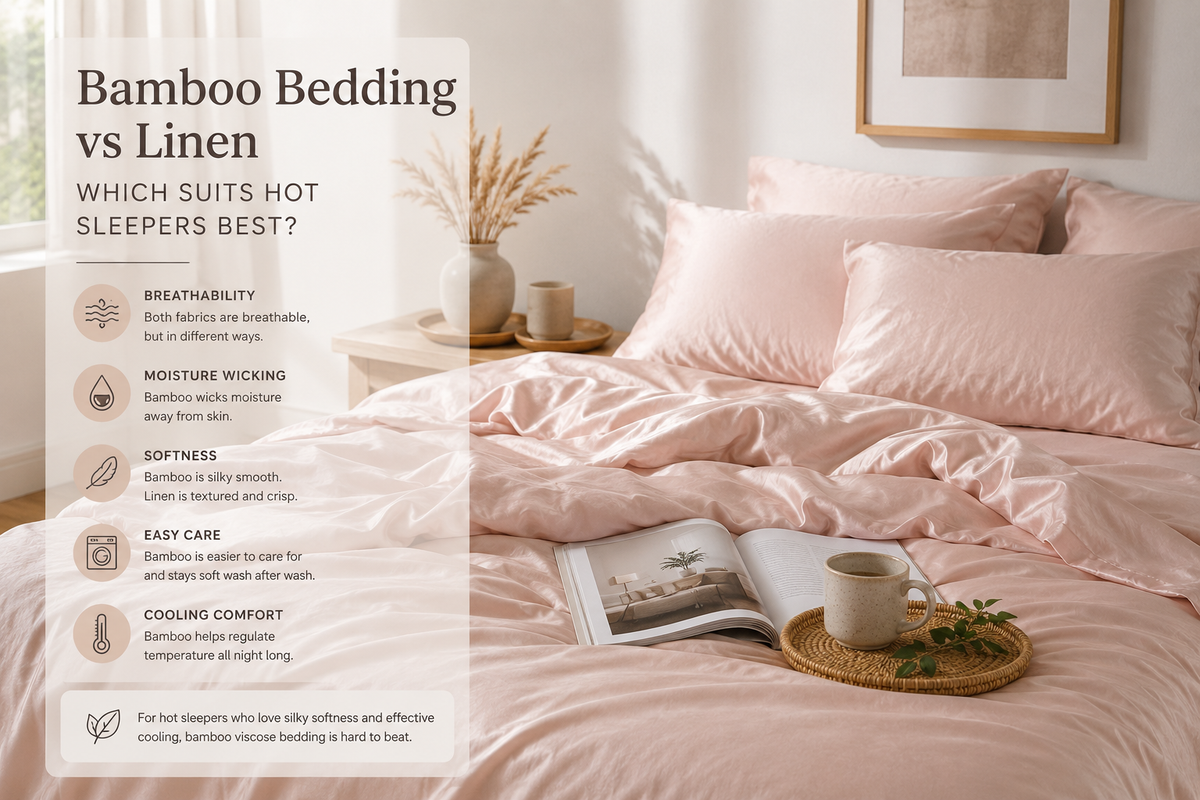
Both fabrics perform well here, though through different routes. Silk’s temperature regulation comes substantially from its natural fibre properties and relatively lightweight construction. Bamboo viscose’s breathability comes from its naturally porous fibre structure, discussed in more detail in our dedicated bamboo vs linen comparison guide, and its active moisture-wicking is generally considered to outperform silk specifically for heavier overnight sweating, since silk, while breathable, does not manage moisture as actively as bamboo viscose’s wicking properties allow.
Comparing Care Requirements
Silk care requirements are considerably more demanding: many silk products require hand-washing or professional dry cleaning, extremely gentle handling, and protection from direct sunlight to avoid colour fading and fibre weakening. Bamboo viscose, cared for correctly as detailed in our dedicated care guide, tolerates regular gentle machine washing at 30°C and low-heat tumble drying, making it a considerably more practical choice for everyday bedding that needs to be washed regularly without specialist care or professional cleaning costs.
Comparing Value for Money
Genuine, high-quality mulberry silk bedding typically carries a very significant price premium, reflecting the labour-intensive nature of silk production and the delicate handling required throughout manufacturing. Bamboo viscose offers a considerably more accessible price point while still delivering genuinely luxurious softness, strong breathability, and independently certified chemical safety — making it a compelling choice for anyone who wants a meaningfully elevated bedding experience without silk’s premium price tag and demanding care requirements.
Ethical and Sourcing Considerations
Silk production has faced increasing scrutiny in recent years around silkworm welfare, since conventional silk production involves the silkworm not surviving the cocoon harvesting process, which has led growing numbers of buyers toward plant-based luxury alternatives on ethical grounds. Bamboo, as a fast-growing plant that regenerates from its own root system without replanting and requires minimal water and no pesticides to cultivate, offers a genuinely more straightforward sustainability and ethical sourcing story for buyers specifically prioritising these considerations in a luxury bedding purchase.
Which Should You Choose?
For buyers who specifically want the traditional prestige and distinctive sheen of genuine silk, and who are prepared to invest in specialist care to protect that investment, silk remains an exceptional if demanding choice. For the considerable majority of buyers seeking a genuinely luxurious, comparably soft alternative that is easier to live with day-to-day, more durable, more breathable for active moisture management, independently certified for chemical safety, and considerably more affordable, bamboo viscose offers a compelling and increasingly popular modern alternative.
Considering Skin and Hair Benefits Specifically
Both fabrics are widely recommended for hair and skin benefits, particularly for pillowcases, given their shared low-friction surface quality. Silk has a longer-established reputation in this specific area, with many hairdressers and dermatologists recommending silk pillowcases to reduce hair breakage and minimise the fine sleep creases some people notice on facial skin after a night on rougher cotton. Bamboo viscose offers a very comparable low-friction benefit, and its added moisture-wicking performance provides a further practical advantage for anyone whose skin or hair is also affected by overnight moisture and heat, not just friction alone. For anyone specifically motivated by skin and hair benefits rather than fabric prestige, bamboo viscose is a genuinely strong, evidence-consistent alternative to silk that is worth serious consideration.
Making Your Final Decision
If your priority is the traditional prestige, distinctive sheen and centuries-established reputation of genuine silk, and you are willing to commit to its more demanding care routine, silk remains a wonderful, if higher-maintenance, choice. If your priority is genuinely luxurious softness combined with practical, everyday liveability — easy machine washing, strong durability, active moisture management and independently verified chemical safety — bamboo viscose offers an increasingly popular and thoroughly compelling modern alternative that a great many former silk devotees have happily switched to without feeling they have compromised on genuine luxury.
A Note on Silk Alternatives Marketed as “Silky”
It is worth being aware that some products marketed loosely as having a “silk-like” or “silky” feel are simply describing a smooth handle rather than genuinely comparing themselves to real silk or bamboo viscose specifically. When comparing options, checking the actual fibre content listed on a product rather than relying on descriptive marketing language such as “silky” alone ensures you are genuinely comparing the fabric types discussed throughout this guide, rather than a synthetic fabric using similar descriptive language without the underlying fibre quality to support it.
Allergy Considerations for Both Fabrics
Both silk and bamboo viscose are generally well tolerated by people with sensitive skin, though it is worth noting that a small proportion of people have a genuine protein-based allergy specifically to silk, given its animal-derived origin, in a way that is not possible with plant-derived bamboo viscose. For anyone with a known silk sensitivity or allergy, bamboo viscose offers a genuinely comparable luxury alternative without this particular consideration, which is a further meaningful factor for allergy-conscious shoppers weighing the two fabrics against each other.
Frequently Asked Questions
Q1: Do bamboo viscose pillowcases offer the same hair and skin benefits silk pillowcases are known for?
Ans: Yes, largely — the smooth, low-friction surface that makes silk pillowcases popular for reducing hair frizz and minimising sleep creases is a quality bamboo viscose shares closely, while offering easier care and independently certified chemical safety.
Q2: Is bamboo viscose considered a genuinely luxury fabric, or is it a budget alternative to silk?
Ans: Bamboo viscose stands as a genuine luxury fabric in its own right, valued for its exceptional softness and performance rather than being positioned simply as a cheaper silk substitute, though it does offer meaningfully better value and easier care than comparable silk products.
Q3: Can silk and bamboo viscose bedding be used together in the same bedroom
Ans: Certainly — some people enjoy combining silk pillowcases with a bamboo viscose duvet cover and sheet set, for instance, taking advantage of each fabric’s particular strengths within a single, considered bedroom setup.
Both silk and bamboo viscose offer genuinely luxurious sleep experiences, and the right choice depends on how much you value silk’s traditional prestige against bamboo viscose’s easier care, stronger moisture management, independent safety certification and more accessible price point.