Night Sweats and Bedding: What Actually Helps
Night sweats affect a genuinely wide range of people for a genuinely wide range of reasons, from hormonal changes during menopause and perimenopause, to certain medications, general hot-sleeper tendencies, illness, or simply a bedroom that runs too warm overnight. While bedding cannot address every underlying cause of night sweats, the right fabric and bedding setup can make a meaningful, practical difference to overnight comfort regardless of the underlying reason.
Understanding Why Bedding Choice Matters for Night Sweats
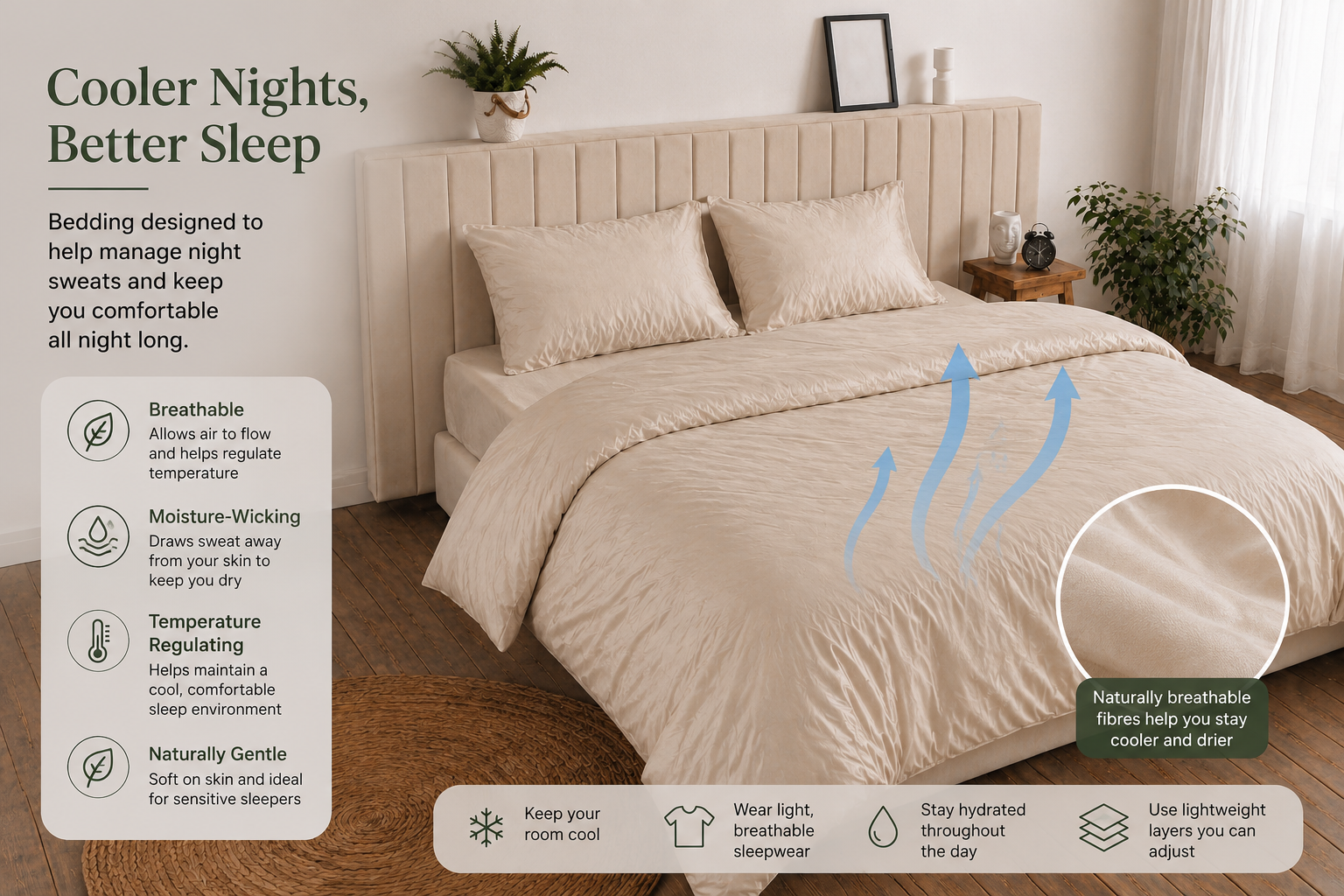
When the body sweats overnight, what happens next depends considerably on the bedding surrounding it. Fabrics that trap heat and moisture against the skin — many synthetic fabrics and some heavier natural fabrics — can create a cycle where sweat accumulates rather than evaporating, leaving the sleeper feeling increasingly damp, clammy and uncomfortable as the night progresses, which can itself worsen sleep quality and, for some people, seem to trigger further sweating in response to the resulting discomfort. Breathable, moisture-wicking fabrics interrupt this cycle by actively moving moisture away from the skin and supporting its evaporation, helping the sleeper feel drier even during an active sweating episode.
Why Breathable Natural Fibres Are Generally Recommended
Natural, breathable fibres such as bamboo viscose, cotton and linen are generally recommended over synthetic fabrics for anyone managing night sweats, since synthetic fibres such as polyester tend to trap heat and moisture against the skin rather than supporting airflow and evaporation. Among natural fibres, bamboo viscose is particularly well regarded specifically for night sweats management due to its naturally porous fibre structure, which supports genuinely active moisture-wicking, drawing sweat away from the skin surface more effectively than many other natural fibres manage.
This is not to say bamboo viscose eliminates sweating itself — no fabric can do that, since sweating is a physiological response rather than something bedding controls — but it can meaningfully reduce the discomfort and disrupted sleep that often accompanies unmanaged overnight moisture.
Also Read: How to Sleep Cooler at Night: 10 Expert Tips for Hot Sleepers in the UK
Bedding Layers and Night Sweats
For anyone experiencing regular night sweats, thinking about the full bedding system, rather than a single fabric choice, tends to produce the best results. A breathable bamboo viscose fitted sheet provides a genuinely dry-feeling surface directly against the skin. A lighter tog duvet, as discussed in our dedicated tog rating guide, reduces excess insulation that could otherwise contribute to overheating in the first place. Breathable bamboo viscose pillowcases matter particularly for anyone whose sweating is concentrated around the head and neck area, a common pattern reported by many people managing hormonal night sweats specifically.
Layering with a removable throw or blanket, rather than relying on a single fixed-tog duvet, also allows for quick, easy adjustment mid-sleep if a sweating episode occurs, without needing to fully wake and change bedding.
Menopause, Hormonal Changes and Night Sweats
Night sweats during perimenopause and menopause are extremely common, driven by hormonal fluctuations that affect the body’s temperature regulation system, and many people going through this life stage report that bedding choice makes a genuinely noticeable difference to overnight comfort, even though it does not address the underlying hormonal cause. Breathable, moisture-wicking bedding, combined with a cooler bedroom temperature and layered bedding that can be easily adjusted through the night, are commonly recommended practical strategies alongside any medical treatment a healthcare provider may suggest for managing the hormonal changes themselves.
It is worth being clear that bedding is a supportive comfort measure rather than a treatment for the underlying hormonal changes driving menopausal night sweats, and anyone experiencing significantly disruptive night sweats should discuss this with a GP, who can advise on the range of medical and lifestyle approaches available specifically for managing menopausal symptoms.
Bedroom Environment Beyond Bedding
Bedding is one part of a wider set of factors that influence overnight temperature and sweating. Bedroom temperature itself matters enormously — many sleep experts recommend a bedroom temperature in the region of 16 to 18 degrees Celsius for optimal sleep, and a room significantly warmer than this can contribute to overheating regardless of how breathable the bedding is. Sleepwear fabric matters similarly to bedding fabric, and wearing heavy, non-breathable pyjamas can undermine even the most breathable bedding setup. Keeping a glass of water by the bed, using a fan for airflow on particularly warm nights, and avoiding heavy meals, alcohol or caffeine close to bedtime are further commonly recommended practical steps that can meaningfully reduce night sweat severity for some people.
When Night Sweats Might Need Medical Attention
While bedding and environmental adjustments can meaningfully improve comfort for many people experiencing night sweats, it is worth knowing when night sweats might warrant a conversation with a GP rather than being managed through bedding and lifestyle adjustments alone. Night sweats that are severe, that occur alongside other symptoms such as unexplained weight loss, fever, or persistent fatigue, or that begin suddenly without an obvious cause such as menopause or a known medication side effect, are worth discussing with a healthcare professional, since these patterns can occasionally indicate an underlying condition that benefits from proper medical assessment rather than bedding adjustments alone.
Sleepwear Choices Alongside Bedding
While this guide focuses primarily on bedding, it is worth briefly noting that sleepwear fabric interacts directly with whatever bedding system you have chosen, and a mismatch between the two can undermine an otherwise well-considered breathable bedding setup. Heavy, non-breathable pyjamas or nightwear can trap heat and moisture close to the skin regardless of how breathable the surrounding bedding is, effectively creating a warm, humid pocket that works against the benefits of genuinely breathable sheets and duvet covers. Choosing lightweight, breathable natural fibre sleepwear, ideally in a similarly breathable fabric to your bedding, helps ensure the full sleep system is working together consistently rather than one element undermining another.
Tracking Patterns to Identify Your Own Triggers
For anyone experiencing regular night sweats without an obviously identified cause, keeping a simple record over a few weeks — noting the nights sweating occurs alongside relevant variables such as room temperature, what was eaten or drunk that evening, stress levels, time of month for those who menstruate, and any recent medication changes — can help identify genuine personal patterns and triggers considerably more reliably than relying on general impression alone. This kind of practical tracking is genuinely useful information to bring to a GP appointment if night sweats are significantly affecting quality of life, since it helps a healthcare professional assess potential patterns and causes more systematically than a general description of “sweating most nights” would allow.
Bringing Together a Genuinely Complete Approach
Managing night sweats effectively tends to work best as a combination of factors working together, rather than relying on any single change in isolation. Breathable, moisture-wicking bedding and sleepwear, a genuinely cool bedroom environment, sensible evening habits around food and drink, and, where a clear underlying cause exists, appropriate medical guidance, together offer considerably more meaningful relief than any one single adjustment alone.
A Note on Duvet and Pillow Fill, Not Just Cover Fabric
While much of this guide has focused on the outer fabric layer, it is worth briefly noting that fill material inside a duvet or pillow also affects overall heat retention, independent of the outer shell fabric. A well-distributed, breathable microfibre fill, as used throughout the Bamboo Haven range, supports better overall airflow through the duvet than some denser, less breathable fill alternatives, working in tandem with a breathable bamboo viscose shell rather than working against it.
Final Word
Managing night sweats is rarely about a single fix, but breathable bedding remains one of the most accessible, immediately actionable steps available while any underlying cause is investigated or treated through appropriate medical channels alongside these practical adjustments.
Closing Thought
Small, consistent adjustments to fabric and environment often add up to a meaningfully more comfortable night than any single dramatic change, so start with what feels most immediately achievable for your own routine.
Patience Through Trial and Adjustment
Finding the exact combination of fabric, layering and room conditions that works best for your own body sometimes takes a little patience and adjustment, and that gradual process of fine-tuning is entirely normal.
Frequently Asked Questions
Q1: Can bamboo bedding completely stop night sweats?
Ans: No — bedding cannot address the underlying physiological or hormonal causes of night sweats, but genuinely breathable, moisture-wicking fabric such as bamboo viscose can meaningfully reduce the discomfort and sleep disruption that often accompanies night sweats by helping manage moisture more effectively than less breathable fabrics.
Q2: Is it worth changing pillowcases more often if I experience night sweats?
Ans: Yes — many people managing regular night sweats find changing pillowcases every two to three days, rather than weekly, helps maintain a genuinely fresh, dry sleep surface, particularly if sweating is concentrated around the head and neck.
Q3: Should I use a lower tog duvet if I have night sweats?
Ans: Often, yes — a lighter tog duvet paired with a breathable bamboo viscose shell is a commonly recommended combination for anyone prone to overheating or night sweats, reducing unnecessary insulation while still maintaining comfortable coverage; our dedicated tog rating guide covers this in more detail.
Night sweats can have a wide range of underlying causes, but regardless of the specific trigger, genuinely breathable, moisture-wicking bedding is one of the more straightforward, practical steps available to meaningfully improve overnight comfort while any underlying cause is being investigated or managed alongside appropriate medical guidance where needed.