Why Thread Count Doesn’t Tell the Whole Story About Bedding Quality
Thread count has become one of the most heavily marketed numbers in the bedding industry, with ever-higher figures used to suggest ever-higher quality. Yet thread count on its own is a considerably less reliable indicator of genuine bedding quality than most shoppers assume, and understanding why reveals what actually matters when choosing sheets, duvet covers and pillowcases.
What Thread Count Actually Measures
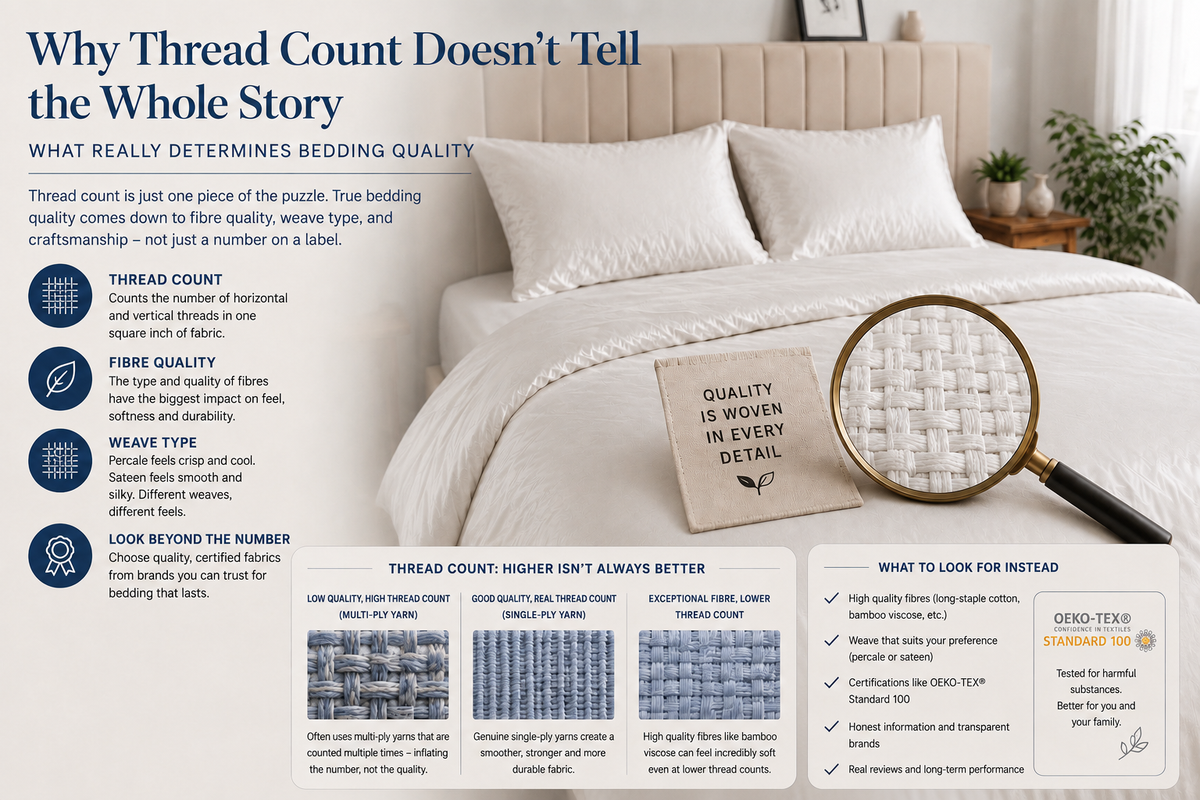
Thread count refers to the number of horizontal and vertical threads woven into one square inch of fabric. In principle, a higher thread count should mean a denser weave, which could translate to a smoother, more durable fabric. In practice, thread count has become such a heavily manipulated marketing figure across the wider bedding industry that the number alone tells you considerably less than it once did.
How Thread Count Figures Are Inflated
A number of manufacturing techniques allow thread count figures to be inflated well beyond what genuinely reflects fabric quality. Multi-ply yarns, where several thinner threads are twisted together and then counted as multiple threads rather than one, allow manufacturers to report dramatically higher thread count figures using essentially the same amount of raw material as a genuine single-ply high thread count fabric. This is why you may see cotton products advertised at 1000 or even 1500 thread count at surprisingly low prices, figures that would be genuinely exceptional and expensive if achieved through authentic single-ply weaving, but which are considerably less meaningful once multi-ply counting inflation is understood.
This industry-wide practice has led many textile experts and increasingly informed consumers to treat very high thread count claims, particularly at budget price points, with healthy scepticism rather than assuming a higher number automatically signals better quality.
Also Read: The Complete Sleep Hygiene Guide for UK Adults: Build Better Sleep Habits Tonight
Why Fibre Quality Matters More Than the Number
The quality and type of fibre used has a considerably greater impact on how a fabric actually feels and performs than thread count alone. A lower thread count fabric made from genuinely high-quality, long-staple fibres can feel noticeably smoother and more durable than a higher thread count fabric made from shorter, lower-grade fibres, since fibre length and quality affect how smoothly threads can be spun and woven in the first place. This is precisely why comparing thread count alone across different fibre types — for instance, comparing a bamboo viscose product to a cotton product using thread count as the primary metric — does not give a genuinely accurate picture of which product will actually feel and perform better.
Bamboo viscose fibres are naturally long and fine, allowing a genuine 300 thread count bamboo viscose fabric to achieve a smoothness comparable to a much higher thread count Egyptian cotton, precisely because the underlying fibre quality and structure, not the thread count number alone, is doing much of the work in creating that smooth, luxurious feel.
Weave Type and Its Effect on Feel
Beyond thread count and fibre quality, the specific weave pattern used significantly affects how a fabric feels and performs. Percale weaves, a simple one-thread-over-one-thread-under pattern, produce a crisp, cool, matte finish popular for warm-weather bedding. Sateen weaves, using a different thread pattern that brings more thread surface to the fabric face, produce a smoother, slightly glossier finish with a subtly warmer feel. Neither weave type is objectively superior — they simply produce different handle and performance characteristics — but this is a further reason thread count alone cannot tell you how a fabric will actually feel, since two fabrics with an identical thread count but different weave types can feel meaningfully different in practice.
What to Actually Look For Instead
Given the limitations of thread count as a standalone quality indicator, a more reliable approach to judging bedding quality involves looking at several factors together: the specific fibre type and its known quality characteristics, independent certification such as OEKO-TEX® Standard 100 confirming the fabric has been tested and verified free from harmful substances, the reputation and transparency of the brand regarding their manufacturing process, and where possible, genuine customer reviews discussing long-term durability and how the product performs after repeated washing rather than simply how it feels straight out of the packaging.
Feel, where possible, is also genuinely informative — handling a fabric sample or purchasing a single item such as a pillowcase before committing to a full bedding set allows you to assess real-world softness and quality directly, rather than relying entirely on numbers and marketing claims.
Why Bamboo Haven Doesn’t Chase Inflated Thread Count Numbers
Rather than pursuing an inflated thread count figure through multi-ply counting tricks, Bamboo Haven’s approach has been to focus on genuine 300 thread count bamboo viscose, achieving a smoothness comparable to a much higher thread count Egyptian cotton through authentic fibre quality and construction rather than through the kind of counting manipulation that has become common across parts of the wider bedding industry. This reflects a broader commitment to transparency over marketing inflation — a genuinely accurate, honestly reported figure that reflects real fabric quality, rather than a larger but less meaningful number designed primarily to look impressive on a product listing.
How to Spot an Inflated Thread Count Claim
A few practical warning signs can help identify when a thread count figure may be inflated beyond what genuine fabric quality supports. Extremely high thread count figures — significantly above 400 to 500 for cotton, for instance — at unusually low price points are worth treating with scepticism, since genuinely achieving very high single-ply thread counts is a labour- and material-intensive process that is difficult to deliver at a bargain price. A brand unwilling or unable to clearly explain their thread count methodology, or one that combines an unusually high thread count claim with vague, non-specific fibre quality descriptions, is also worth approaching more cautiously than a brand that is transparent and specific about exactly how their stated figures are calculated and verified.
How Thread Count Marketing Has Changed Consumer Expectations
Understanding the history of thread count marketing helps explain why this single number gained such outsized importance in the first place. Thread count became a widely marketed figure in the bedding industry from the 1990s onward, as manufacturers and retailers searched for a simple, easily comparable number that shoppers could use to judge quality at a glance, similar to how megapixels became a shorthand (and similarly imperfect) quality signal in early digital camera marketing. Once thread count became established as the primary quality shorthand in consumers’ minds, competitive pressure pushed manufacturers toward ever-higher advertised figures, which is precisely how the multi-ply counting practices discussed earlier in this guide became so widespread across the industry.
This history is worth understanding because it explains why unwinding these inflated consumer expectations takes active, informed effort — thread count remains deeply embedded in how many shoppers instinctively judge bedding quality, even though the textile industry and increasingly informed consumers understand its real limitations considerably better today than when the marketing convention first took hold.
A Practical Comparison Exercise
For anyone wanting to test these principles directly rather than relying on this guide’s explanation alone, a genuinely useful exercise is physically comparing a lower thread count, high-quality natural fibre product — a genuine 300 thread count bamboo viscose pillowcase, for instance — against a considerably higher advertised thread count budget cotton product. In a large proportion of cases, the lower-thread-count natural fibre product will feel noticeably smoother and more substantial, providing a direct, tangible demonstration of exactly why thread count alone cannot reliably predict fabric quality, and why fibre type deserves at least as much attention as the number printed on the packaging.
Final Thoughts on Judging Bedding by More Than a Number
Thread count will likely remain a widely referenced figure across bedding marketing for the foreseeable future, given how deeply embedded it has become in consumer shopping habits. Armed with the understanding in this guide, you are now better equipped to view that number as one small data point among several genuinely important quality indicators, rather than treating it as the single defining measure of whether a bedding product is worth buying.
Frequently Asked Questions
Q1: Is a 300 thread count considered good quality?
Ans: Thread count in isolation does not determine quality, but a genuine, honestly reported 300 thread count made from high-quality long-staple fibres such as bamboo viscose can deliver smoothness and performance comparable to a much higher thread count in a lower-quality fibre, making the specific fibre type at least as important as the number itself.
Q2: Should I avoid any product advertising a very high thread count?
Ans: Not automatically, but a very high thread count claim, particularly combined with an unusually low price, is worth researching further to understand whether it reflects genuine single-ply weaving or the kind of multi-ply counting inflation discussed in this guide.
Q3: What is more important than thread count when choosing bedding?
Ans: Fibre type and quality, weave type, independent certification such as OEKO-TEX® Standard 100, and brand transparency about manufacturing all provide a more genuinely reliable picture of bedding quality than thread count considered in isolation.
Thread count remains a useful piece of information when considered alongside fibre type, weave and certification, but it should never be the sole factor guiding a bedding purchase decision. Understanding what is genuinely behind the number empowers you to make a considerably more informed choice than following marketing claims alone.